


Key points
- No destination has “the real you” sitting there as an answer. The trip still has meaning.
- Standing somewhere your job title and other people’s expectations can’t reach, you can see your own unfiltered reactions.
- Think “take some distance” rather than “go and search.” Then add a few small steps before you leave and after you return. Without them, research suggests most of it fades within a few weeks.
I feel like I could go on a journey to find myself and still come back with nothing. Is there any point?
Why won’t I find anything on a self-discovery trip?
Not finding anything is the expected outcome. There is no “true self” placed somewhere far away, waiting to be picked up. The meaning of a trip isn’t in collecting an answer.
It’s in stepping out of your everyday roles and getting enough distance to watch your own reactions.
If nothing changes when I’m back, why go at all?
“I’ll just come home and everything will be the same.” You probably know that feeling. It’s half right. But that’s not because travel is useless—it’s because the trip was set up as an answer hunt.
Change the job you’re giving the trip, and the disappointment changes shape too.
What does “I want to go somewhere far away” actually mean?
The urge to get far away may not be a wish for an answer at all. It may simply be a wish to be a little less where you are right now. That’s a reasonable wish, and it doesn’t need to be dressed up as a quest.
What actually becomes visible when I travel?

What do I notice when my roles disappear?
Not a big answer. What shows up is your raw reaction: what makes you feel settled, what wears you down. In a place with no job title, no family, no colleagues, the habit of adjusting to someone’s expectations switches off.
Psychology research suggests that viewing yourself from a slight distance makes emotions easier to sort through (Kross & Ayduk; see Sources).
How does distance turn into noticing?
- Step out of your roles — The habit of fitting expectations stops
- Raw reactions surface — You see what calms you and what drains you
- You notice the gap — The difference between there and everyday life gets put into words
- Try something small at home — Only what lasts stays
What small shifts should I pay attention to?
They’re small. For example: “My shoulders aren’t tight the way they are when I’m smiling politely in a meeting.” The point is not to let tiny differences in your body slip past.
That tightness, or its absence, is information you don’t usually get to read.
I’m worried I’ll slip right back once I’m home. What can a trip not give me?
What can’t a trip give you?

What a trip can’t give you is change that continues after you return. Research on vacations has found that the good mood of a trip tends to fade back to baseline within a few weeks of coming home (see Sources).
That’s not weak willpower. It’s how strong your environment is.
You walk through the ticket gate on the way back, open your email the next morning, and the person you were on the trip quietly disappears. You’ve felt this.
What are the common traps?
Mistaking the high for the answer
Deciding the openness you felt on the trip is “the real me.” When you get home, it vanishes along with the openness.
No steps after you return
You don’t write down what you noticed, you don’t try anything, and it gets buried in daily life.
Going to pick up an answer
You blame yourself for “not finding it,” and start looking for the next trip.
Is understanding something the same as changing?
Understanding something in your head and your life actually changing are two different things. If you mix them up, every trip ends in disappointment.
The feeling of “I get it now” is real, but it’s not the same as a Tuesday that goes differently.
FREE PROGRAM
A doorway to seeing your life anew — through the body
Add us on LINE to receive the free online lessons — the parts we couldn’t fit into this article.
Free to join, unsubscribe anytime. This is not medical treatment; results vary by individual.
If I think of it as “taking distance,” what should I do before and after the trip?
What should I do before the trip?
Before you leave, write down three things that feel off in your current life. This swaps the goal from “bring back an answer” to “watch how these three things move.”
Three things to do: write them down, don’t pack the schedule, and pay attention to what your body is feeling. If the day is filled with transit and photos, there’s no gap for your raw reactions to show up. How to choose a destination is covered in a separate article.
After I’m back, what keeps what I noticed from disappearing?

Within three days of returning, write one line about the gap between how you reacted there and how you react at home. Then pick one small thing to try in daily life.
Not “quit my job”—more like “don’t make plans on Wednesday nights.” Only what lasts stays. See also how to put a vague unease into words.
What’s the difference between traveling alone and working with a professional or a group?
What is the biggest difference?
The biggest difference is whether you have support after you get home. Traveling alone is free, but the steps after you return run on you alone. “How was the trip?” “It was great.” Right there, in that exchange, what you noticed starts to thin out.
How do cost, freedom, and the chance of slipping back compare?
Traveling alone costs only the trip itself, gives you the most freedom, and the risk of slipping back is low in the sense that there’s little to slip back from. It suits people who first want distance.
Talking with a professional is paid per session, with medium freedom, and medium risk of slipping back. It suits people who want to sort things out in words.
Joining a program costs the stay plus fees, has less freedom because there’s a structure, and the risk of slipping back depends on whether there’s a follow-up process after you return.
It suits people who keep going back to the same place when they do it alone.
For people who slip back when they go alone: what can I choose instead of a trip?
What is a guided retreat, and how is it different from a trip?
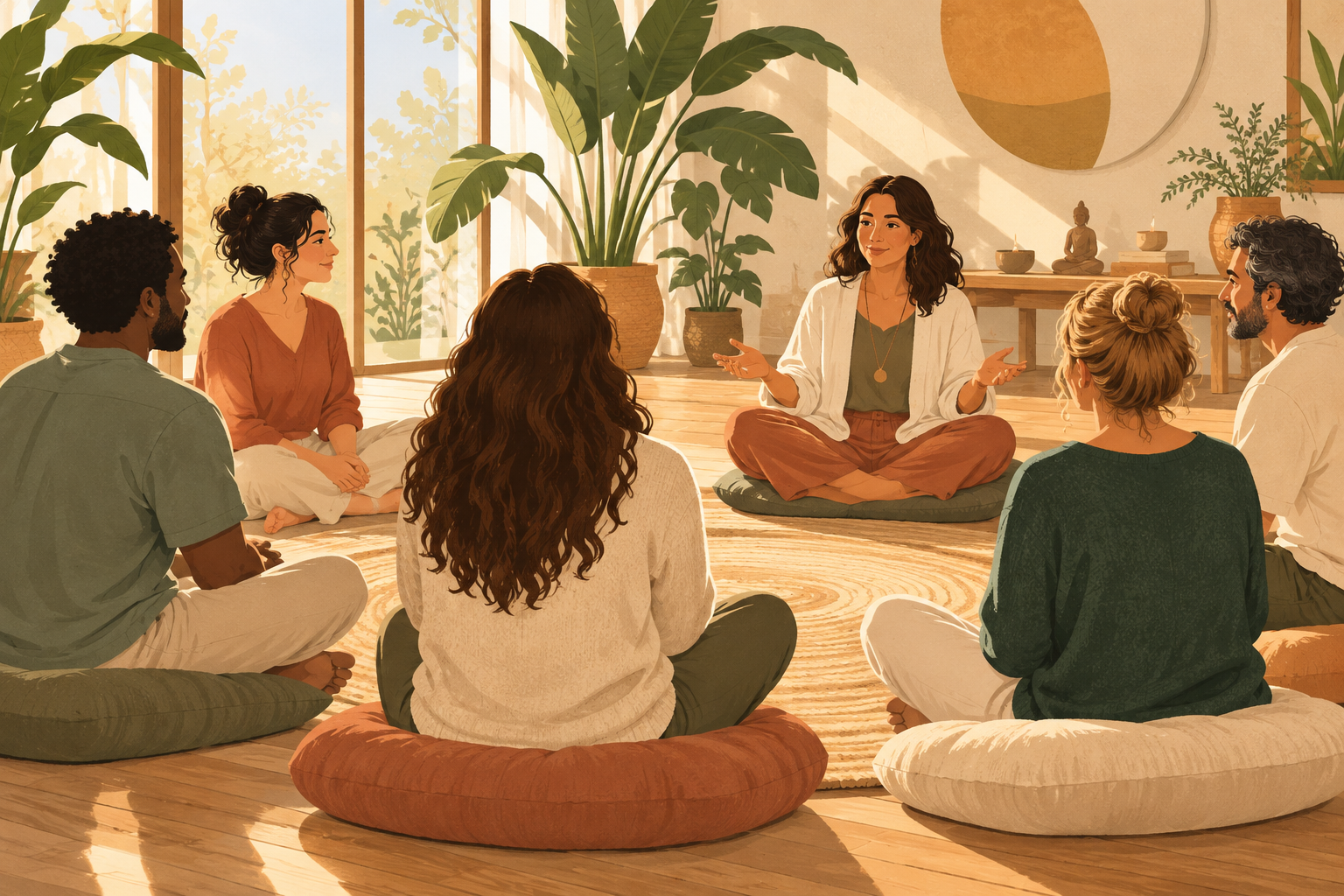
If you’ve traveled alone repeatedly and keep returning to the same spot, a program-style retreat where you work with a guide is one option. It is not a superior version of travel.
It’s the same “taking distance”—done with people instead of by yourself. With others present, it’s easier to face the questions you tend to avoid alone. That’s the difference.
How do I choose one?
Five things to check:
- The organizer’s background
- Whether you can stop partway through
- Fees and cancellation terms
- Whether there’s follow-up after it ends
- How intense any breathwork is, and whether someone stays with you
Is it okay to start with a 2-night, 3-day retreat right away?
Can I go straight into two nights?
Yes, starting right away is fine. If you have health concerns or an existing condition, check in beforehand. It’s also fine to first practice paying attention to bodily sensations on a day trip, then decide.
What does nehan’s program include?
nehan’s “Soumatou” (seeing your life flash before your eyes) is two nights and three days in Kobuchizawa, with a 14-day integration period afterward—time for what you noticed to settle into daily life.
Details are on the Soumatou page and at a consultation session. We also publish an overview of ways to face yourself, how to get there from Tokyo, and participants’ accounts.
FAQ
Q: How many days does a journey to find yourself need? A: Days matter less than whether you get time away from roles and expectations. Two nights can be enough if you don’t fill the schedule.
Q: Does it have to be overseas? A: Distance matters less than being somewhere nobody knows you, with open space in the schedule. A nearby domestic trip works.
Q: I felt like I’d found an answer on the trip, but it disappeared when I got home. Did I fail? A: No. The high wearing off is natural. Writing one line before it fades and choosing one small thing to try at home makes it more likely to stay.
Q: Who is a group setting suited to? A: People who keep going back to the same place after traveling alone, or who want support after returning. Use the five checks above to choose.
FREE PROGRAM
A doorway to seeing your life anew — through the body
Add us on LINE to receive the free online lessons — the parts we couldn’t fit into this article.
Free to join, unsubscribe anytime. This is not medical treatment; results vary by individual.
Sources / References
- de Bloom, J. et al. (2010) Review of vacation effects and their course after returning home
- Kross, E. & Ayduk, O. Series of studies on self-distancing and emotion regulation
- nehan public program overview (Kobuchizawa, Yamanashi; 2 nights 3 days; 14-day integration)
This article is general information, not medical advice. Results vary from person to person. If you have concerns about your health, please consult a professional.




