


Key takeaways
- A digital detox means deliberately stepping away from your phone and computer for a set amount of time.
- It isn’t about throwing your devices away. It’s a habit for putting your time and attention back in your own hands.
- People hope for easier sleep and better focus, though results vary from person to person.
- You can start by choosing one short window and one place, such as before bed or during meals.
Three stops on the train. You’ve opened the same app four times without noticing. There was nothing in particular you wanted to see.
What does digital detox mean, and what does it do?
A digital detox is stepping away from your phone and computer for a set time. Easier sleep and steadier focus are the hoped-for effects, but how they show up differs from person to person.
Your phone buzzes on the desk in the middle of a meeting. That alone is enough to make you lose the thread of what’s being said, isn’t it?
What is a digital detox?
A digital detox means consciously keeping your distance from your phone and computer for a fixed period. It’s a way of deciding again, for yourself, when you use them.
I don’t recommend the ‘quit everything’ approach. It’s hard to keep up.
What happens when you step away from your phone?
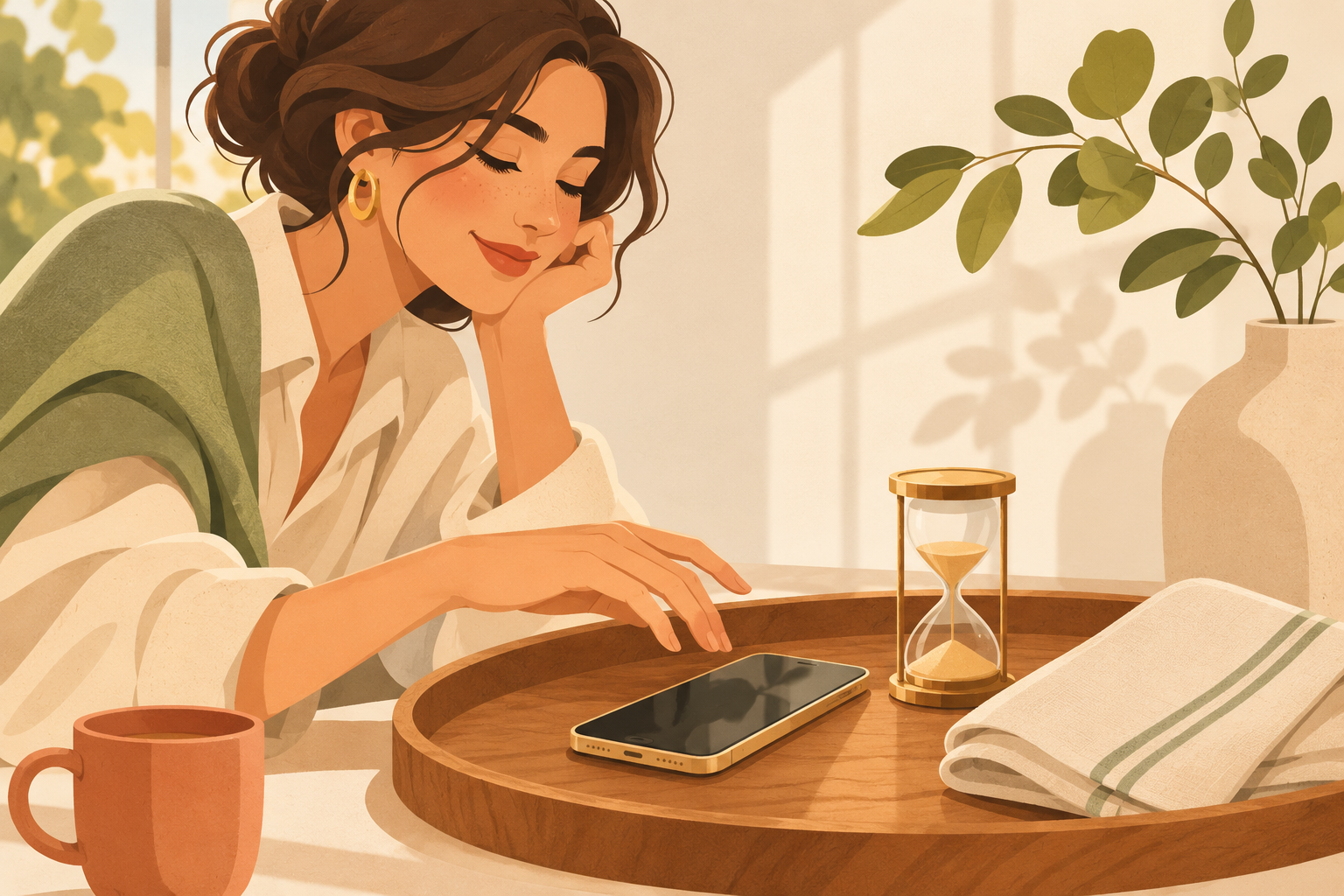
Three effects are commonly hoped for: falling asleep more easily, focusing more easily, and comparing yourself to other people less often. How much of this you notice varies from person to person.
In a study by Fitz and colleagues (2019), which ran for about two weeks, people who batched their notifications into three deliveries a day reported lower stress.
People who switched notifications off completely reported more anxiety. The paper is listed under Sources at the end.
What matters is not cutting yourself off. What matters is deciding for yourself when you look.
- Opening without thinkingYour hand goes to the screen for no reason
- Stepping away on purposeYou decide again when you use it
- Noticing your stateRestlessness and tiredness become easier to see
- Attention back in your handsTime and attention become easier to choose for yourself
How can I tell whether I need a digital detox?
You can check whether you need a digital detox by seeing if these signs keep showing up:
- You open the screen with no reason to
- You feel uneasy when there are no notifications
- You’re looking at it right up until you fall asleep
- You feel tired afterwards and aren’t sure why
For example, someone in your family is talking to you and your eyes stay on the screen. All you say is ‘mm-hm.’ Is that happening more often?
If two or more apply, it’s worth trying. It’s different when low mood or sleeplessness is strong and ongoing. In that case, talking to a doctor or another professional first is the safer route.
Where do I start at home?
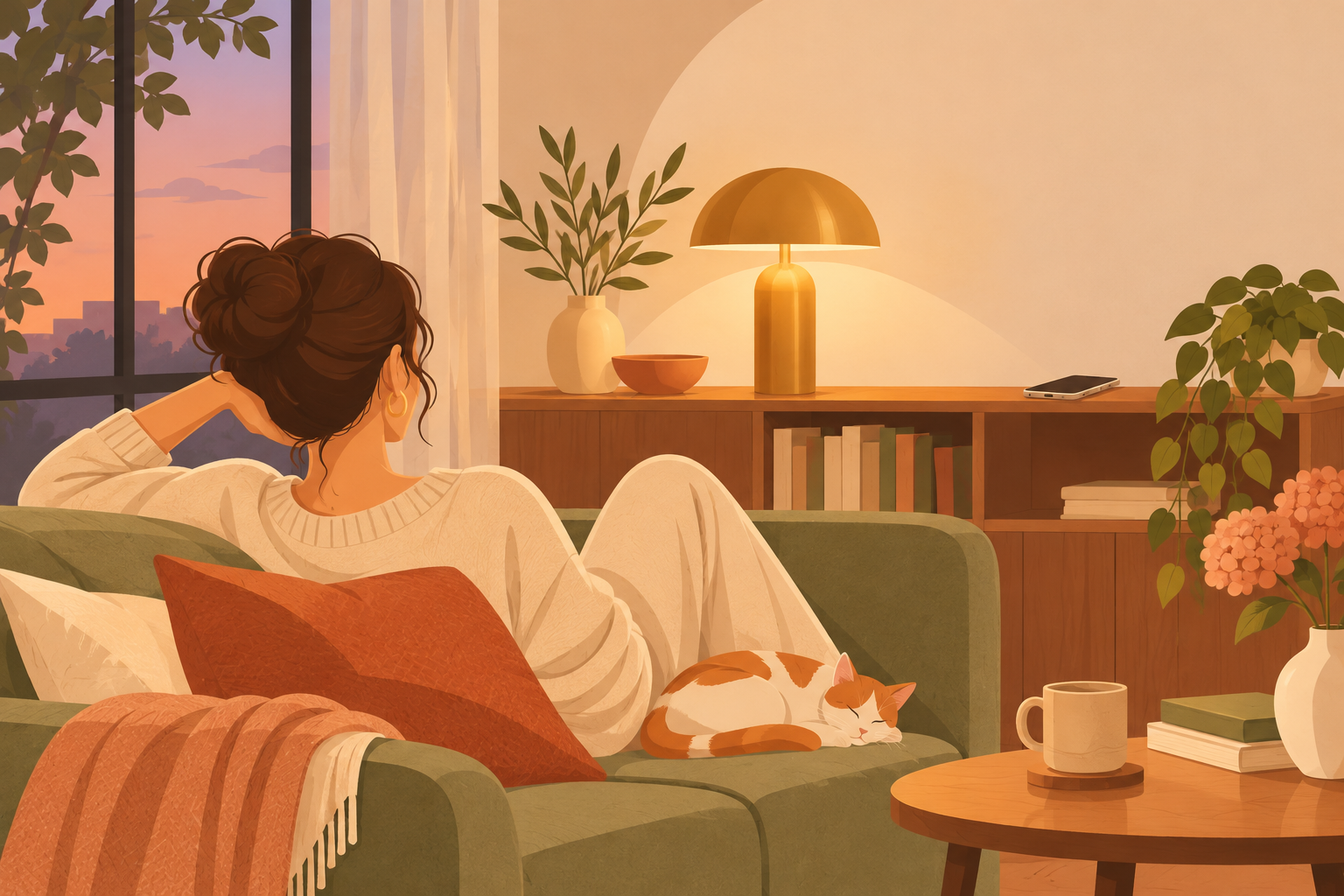
Choosing one place to put your phone and one time to leave it there is enough to begin.
You get home from work and sit down on the sofa. Your hand is already reaching for your phone. Picture that kind of evening.
What’s the first step in a digital detox?
There are three things you can do on your own.
Write it down on paper
When, where, and what you opened. Take notes for one day only.
Choose one time and one place
Keep it out of the bedroom, or set it aside during meals. Try something small.
Put it down and turn your attention to your body
Rest with the screen face down and notice how your shoulders and breathing feel.
None of this is about gritting your teeth. It’s about where the phone sits.
If it’s next to your pillow, anyone would look at it. Just moving the charger to the entryway tends to cut down how often you reach for it at night.
What should I do with the time once my phone is down?

Don’t fill the time you free up from your phone with some other stimulation. I’d suggest leaving it as time to do nothing much.
You may feel restless at first. That restlessness may be something the screen was usually covering.
Good fits are a walk, writing on paper, or a short meditation of about three minutes. Each one lets you notice what your body and mood are doing.
What if I can’t keep it up alone?
When you can’t keep it up alone, one option is to change the format. You can choose from three: doing it yourself, working with a professional, or joining a setting built for it.
The weekend went well. Then by lunch break on the first day back, everything was the way it was before. If you’ve been through that, the three options below are a guide.
Do it myself, work with a professional, or join a program: which should I choose?

Two things decide which format fits you: how heavy the problem is, and whether you can keep going alone.
Doing it yourself suits people whose tiredness is mild and who have the energy to experiment. It costs almost nothing and takes a few minutes a day. The catch is that it tends to fizzle out after a few days.
Working with a professional suits people whose insomnia or low mood is strong and ongoing. You pay per consultation, and it usually takes a few weeks or more.
Check that the person is a good match for you before you commit.
Joining a setting, such as a program-style retreat, suits people who slip back no matter how many times they try and who can take a few days off. It costs a participation fee plus those days away.
Confirm the content and the safety arrangements beforehand.
If your tiredness is mild, trying it yourself first is enough. If the sleepless days or the low mood continue, go to a professional without hesitating.
What can I do when I keep slipping back on my own?
Slipping back after a digital detox is no reason to blame yourself. It may not be weak willpower. The feelings you were filling with your phone may simply still be there.
You decided to stop for the night, and you’ve opened it again. If you keep having nights like that, the article on why we go back may help.
One option is a place where you step away for a few days and face yourself. It suits some people and not others. When you’re choosing one, check these five things:
- The organizer’s background
- Whether you can say no partway through
- The fee and the cancellation rules
- The follow-up after it ends
- How intense the breathing practices are, and whether someone stays with you
A fuller checklist is in the article on how to choose. If you’re considering a retreat, it’s worth reading first.
nehan also holds a three-day, two-night self-transformation retreat in Kobuchizawa. You work with a guide, starting from the state of your body and your awareness.
After you go home there is a 14-day integration period, and you bring one change back into daily life.
If you’re unsure about jumping straight into three days and two nights, try the three things you can do at home first. Then look into the details before you decide.
The overview is at Soumatou wo Miru Tabi (A Journey to Watch Your Life Pass Before You), and accounts from people who took part are in Stories.
FAQ
Q: How many days should a digital detox last? A: There’s no fixed number. You can start with a short stretch, such as the hour before bed or half a day on the weekend.
Q: Is there a way to do a digital detox at home? A: Yes. Make one rule about time and place, such as keeping your phone out of the bedroom or turning off notifications.
Q: Can I do a digital detox if I need my phone and computer for work? A: Yes. Use them during work hours and step away only in the time outside work. That’s enough.
Q: I’ve heard digital detoxes don’t work. Is that true? A: How it feels varies from person to person. There’s more in For people who feel a digital detox is pointless.
FREE PROGRAM
A doorway to seeing your life anew — through the body
Add us on LINE to receive the free online lessons — the parts we couldn’t fit into this article.
Free to join, unsubscribe anytime. This is not medical treatment; results vary by individual.
Sources and references
- Digital Daijisen (Shogakukan), entry for ‘デジタルデトックス’ (digital detox)
- Fitz, N., Kushlev, K., et al. (2019). Batching smartphone notifications can improve well-being. Computers in Human Behavior.
- nehan official site, public overview of ‘Soumatou wo Miru Tabi’ (/soumatou/)
This article is general information and is not medical advice. Results vary from person to person. If you have concerns about your health, please consult a professional.




