


Key points
- Not being able to choose isn’t weakness. It means both paths hold something that matters to you.
- The right answer isn’t settled before you choose. The harder you look for it, honestly, the less you can move.
- Ask “What don’t I want to lose?” rather than “Which one is correct?” That’s where clues to what you really want start to show up.
Why can’t you choose at a crossroads in life?
Because both paths hold something you don’t want to let go of.
You can pick a lunch order in three minutes, right? That’s because either one is fine. The size of the indecision matches the size of what you care about.
I’m at a crossroads in life and can’t choose either path. What should I do?
Stop trying to “decide right now.” Then separate the deadline for deciding from the time you spend going back and forth. For example: “I answer by the end of the month. I only deliberate for 30 minutes at night.”
On the commuter train, you open the job-offer email, then close it again. It feels like thinking, but you’re only circling the same spot.
Left alone, indecision spreads across the whole day. Put a time limit on it, and the hours when you’re not deliberating come back.
Why does searching for the right answer make it harder to move?
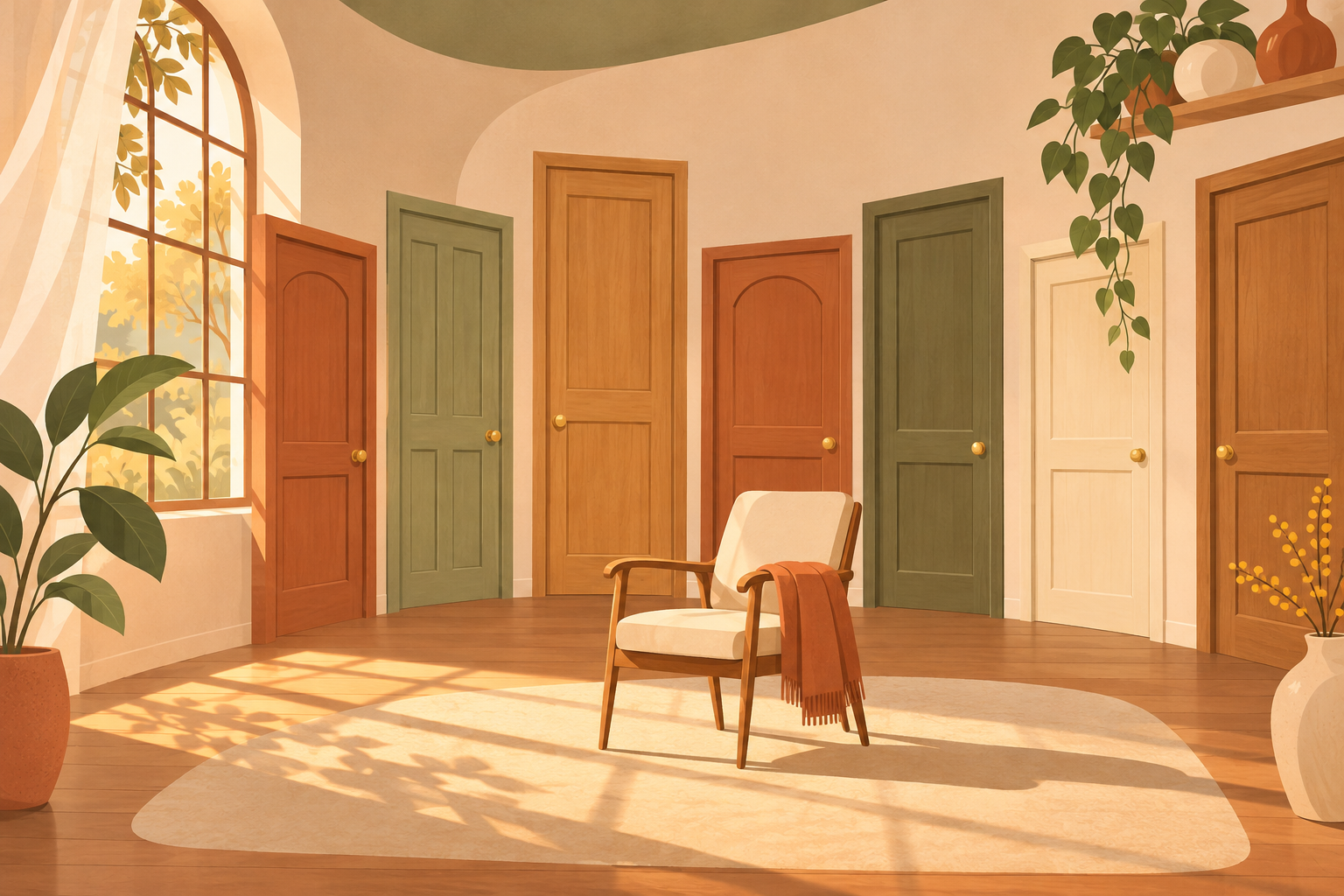
- Search for the right answerYou keep researching an answer that doesn’t exist yet
- The material piles upThe more you read, the more there is to compare
- Deciding gets harderWith more options, you can’t move
- Anxiety growsAfraid of regret, you start researching again
↻ 最初に戻る
The right answer isn’t settled before you choose. It only takes shape in how you live after choosing.
Research suggests that the more options people have, the harder deciding can become (Iyengar & Lepper, 2000). Other research suggests that people who seek the very best option tend to feel more regret (Schwartz et al., 2002).
Understanding something in your head and feeling settled about it are two separate things. If a pros-and-cons table isn’t settling it, you’re just looking in the wrong place.
I blame myself for not being able to choose. Am I weak?
You’re not weak. Being unable to choose is a sign that you’re properly feeling the weight of what you’d lose.
Two voices are mixed together here. One is the indecision itself: “Which one?” The other says, “Something’s wrong with me for not being able to decide.”
The second is usually the one that hurts. On nights when the blaming voice is loud, it’s fine to take the day off from deciding altogether.
FREE PROGRAM
A doorway to seeing your life anew — through the body
Add us on LINE to receive the free online lessons — the parts we couldn’t fit into this article.
Free to join, unsubscribe anytime. This is not medical treatment; results vary by individual.
How do you notice what you really want while you’re undecided?
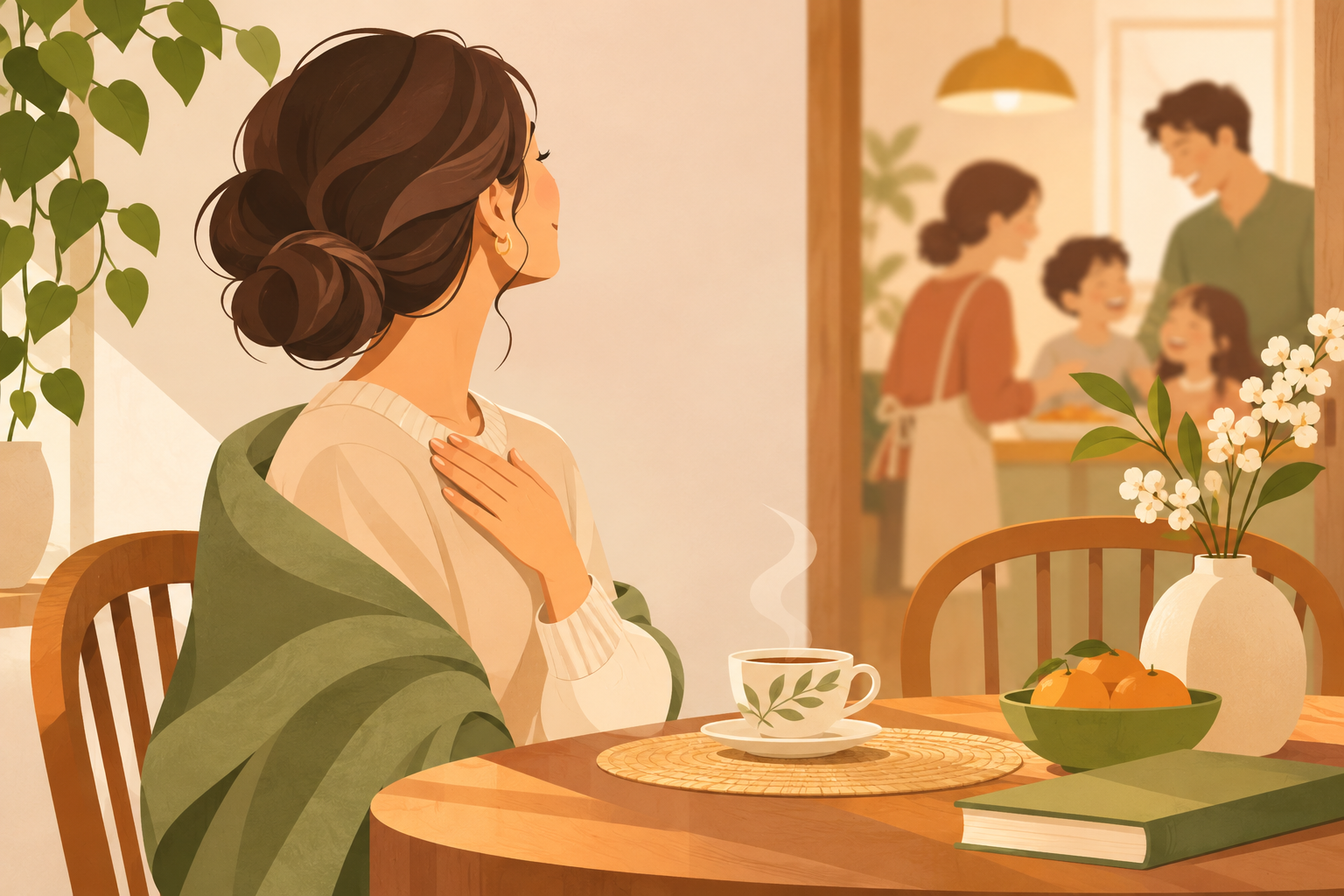
Pause the comparing in your head for a while. Then look at what you’d lose, and at how your body responds.
Someone in your family asks, “So, what are you going to do?” and no words come. That’s not because you have no answer. It just hasn’t turned into words yet.
How can I notice what I really want when I’m stuck between two choices?
There are three things you can do on your own. The decision stays yours.
Write down what you’re afraid to lose
For both paths, put on paper the things you’d struggle without.
Sleep on it, then reread
Close the notebook, go to bed, and read it again the next morning.
Test one path in a small way
Spend half a day walking around the town you might move to, or something similar, and check how your body feels.
On the way home from that small test, ask your body. Are your shoulders lighter? Does your stomach feel heavy?
The body sometimes arrives at an answer before the head does. If it’s hard to feel anything, ways to get back in touch with your body’s sensations may also give you a clue.
Thinking alone, talking to a professional, or joining a program: which suits me?

What fits depends on two things: how deep the indecision runs, and whether you can keep going on your own.
Working on your own suits people who can keep up the writing. It takes a little time each day, starting today. The thing to watch is that it’s easy to go around in circles.
Working with a professional suits people who sort things out by talking. It means booking a few sessions, and it’s worth checking whether the two of you are a good fit.
Joining a setting such as a program-style retreat suits people whose thinking doesn’t move forward in daily life. It takes a few days off, and safety needs checking first.
If you can write for 10 minutes at night, start on your own. If three days of writing bring up only the same things, it’s time to talk with someone.
It’s different if you’ve gone days without being able to sleep or eat. In that case, talk to a doctor or a mental health professional first.
What should I check when choosing where to get help or which program to join?
Check five safety measures before you press the sign-up button.
- Is the organizer’s background clearly stated?
- Can you say “that’s enough” and stop partway through?
- Are the fees and cancellation rules written down?
- Is there follow-up after it ends?
- How intense is any breathwork, and is someone there to accompany you?
If even one is unclear, contact them and ask. A place that stays vague after you’ve asked is a place you don’t need to choose.
The details are in our article on how to choose a retreat.
For people who end up back in the same place on their own
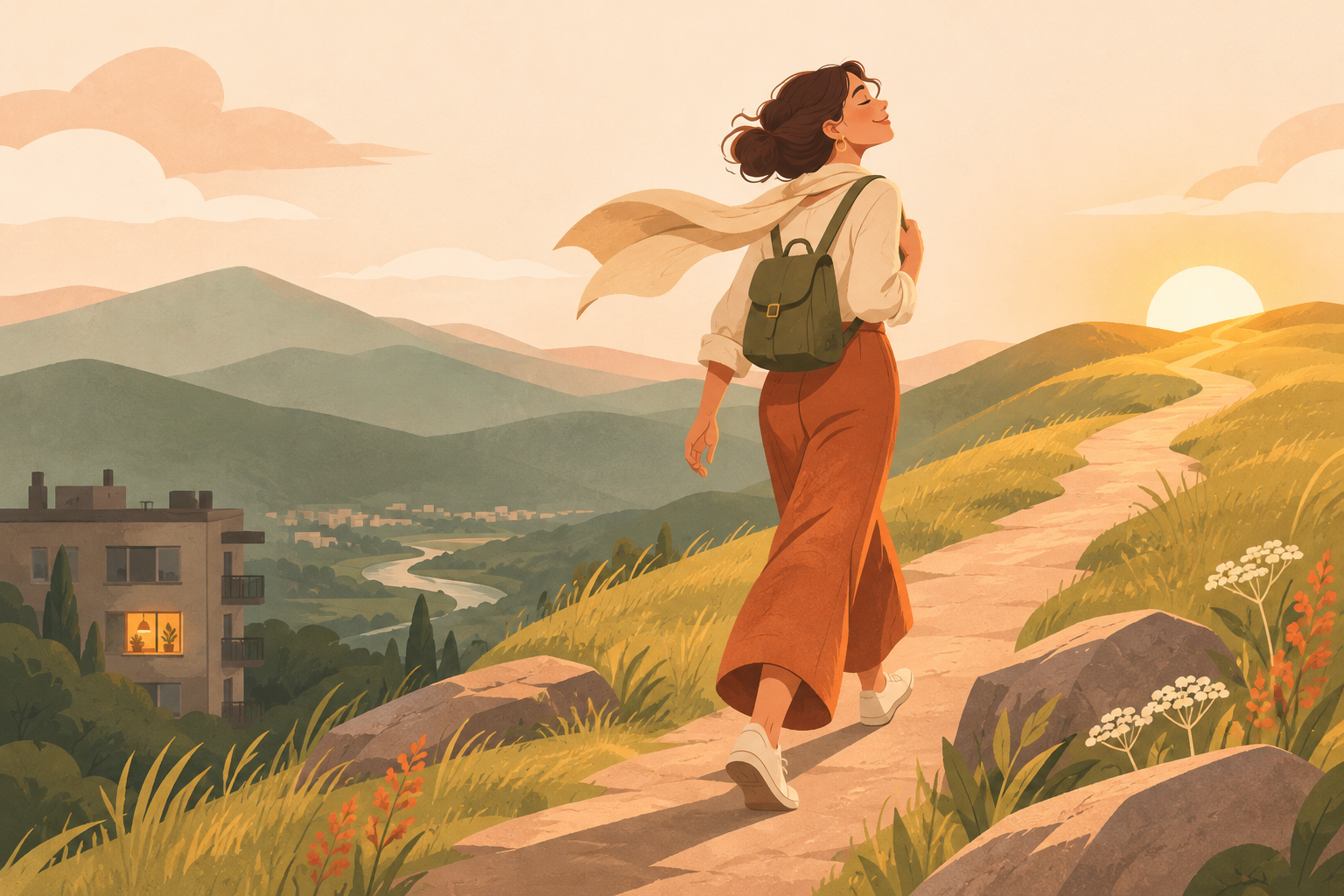
If you’ve tried on your own and still circle the same spot, one option is to change the place itself.
In the same place, the same thoughts tend to come up.
When I think alone, I keep returning to the same doubt. Is there another option?
A self-transformation retreat, where you step away from daily life for a few days and work with a guide, is one option. It applies only if you’ve tried writing down what you fear losing, sleeping on it, and testing one path in a small way, and still return to the same doubt.
A retreat in this sense is different from a trip to rest in nature. It’s time spent in a safe setting, facing parts of yourself that your usual way of thinking doesn’t reach.
What is nehan’s retreat like?
nehan’s retreat is a residential stay of two nights and three days in Kobuchizawa, Yamanashi Prefecture. The 14 days after you go home continue as a period for settling the experience into daily life.
How it feels varies from person to person.
FAQ
Q: What is a crossroads in life? A: A fork in the road where you have to make a choice that will largely shape how you live from here on. Work, marriage, and where to live are typical examples.
Q: What should I do when I’m torn between two options? A: Before comparing the good points, write down what you’re afraid to lose with each one. Then test whichever one you can try in a small way, and check how your body feels.
Q: I’m scared I’ll regret it whichever I choose. A: Almost no choice comes with zero regret. Feeling at peace with a choice grows out of how you live after making it.
Q: What if the deadline is close? A: Rest for even one night, then look again. Asking the other party whether the deadline can be extended is a perfectly good step too.
Q: Is it okay to jump straight into a retreat of two nights and three days? A: There’s no need to push yourself to join. Try the three things you can do on your own first, check the safety measures, and then decide.
Q: How much does the Soumatou Journey cost? A: We go over the fee at the consultation session.
The thinking behind this is in our article on life turning points and retreats, and you can get a sense of the setting from the Soumatou Journey page and participants’ stories.
It’s fine to decide whether it suits you after you’ve heard more.
FREE PROGRAM
A doorway to seeing your life anew — through the body
Add us on LINE to receive the free online lessons — the parts we couldn’t fit into this article.
Free to join, unsubscribe anytime. This is not medical treatment; results vary by individual.
Sources/References
- Iyengar, S. S., & Lepper, M. R. (2000). When choice is demotivating: Can one desire too much of a good thing? Journal of Personality and Social Psychology.
- Schwartz, B., et al. (2002). Maximizing versus satisficing: Happiness is a matter of choice. Journal of Personality and Social Psychology.
- nehan’s published program overview (Kobuchizawa, two nights and three days, 14 days after returning home)
This article is general information, not medical advice. Results vary from person to person. If you have concerns about your health, please consult a professional.




