

Friday night, and the long weekend you fought for is finally here. You soak in a hot spring, eat well, sleep ten hours. And then Monday morning, the moment you step onto the train, the exhaustion is right back where you left it. Sound familiar? Rested, but somehow not restored. If you keep pulling on that thread, you eventually arrive at something called a wellness retreat.
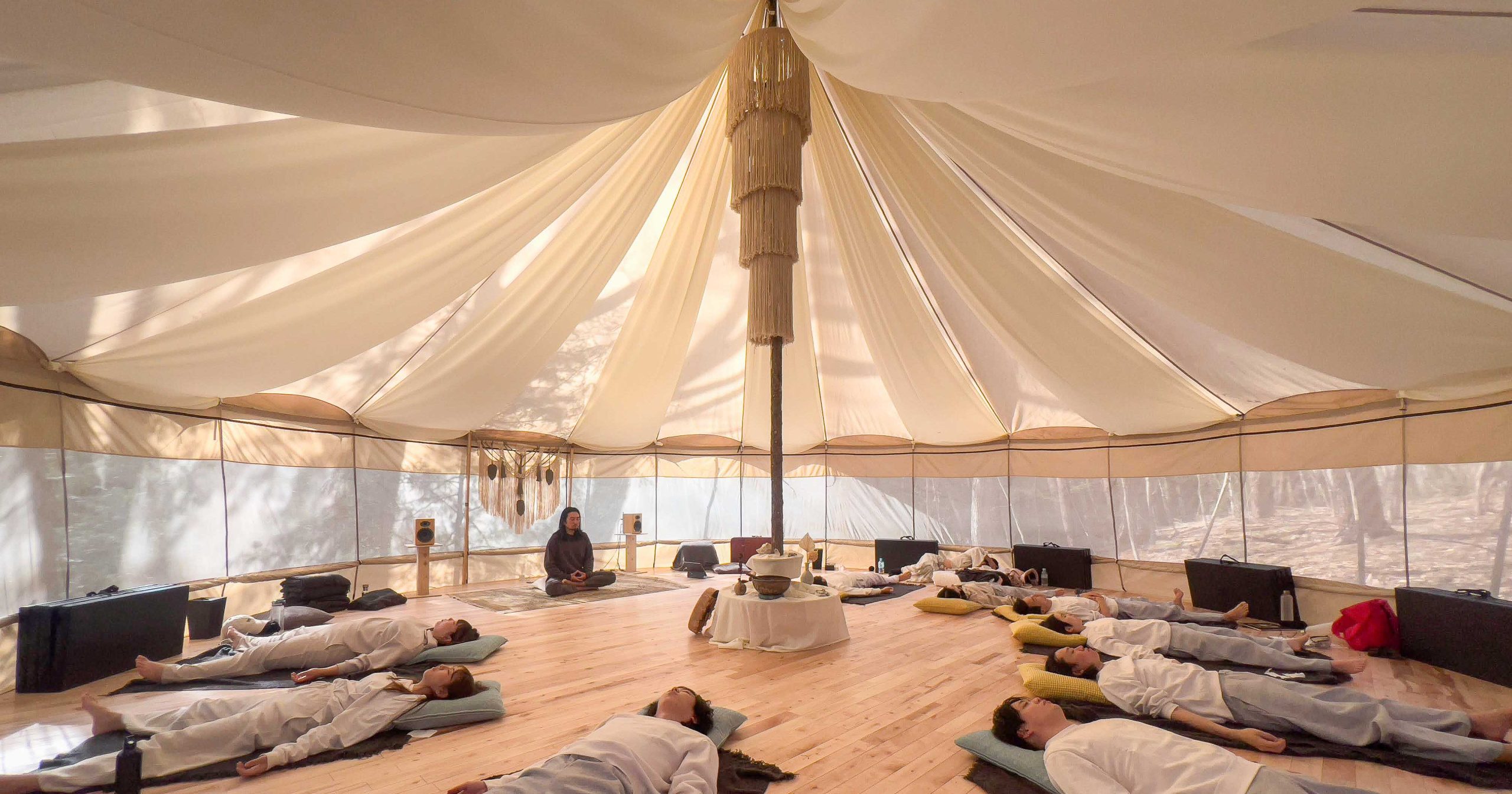
A wellness retreat is a stay of several days in an environment physically removed from your daily life, designed not just for rest but for genuinely resetting body and mind — through practices like breathwork, meditation, mindful eating, and time in nature. What separates it from a holiday is the goal: you are meant to come home different.
Resting and restoring are not the same thing
A resort is an escape from daily life. A retreat is a redesign of it. Escape matters — but if what you do in your escape is scroll, drink, and overeat, you have only changed the scenery of your routine. Your nervous system is running the same program in a nicer location. Which is why the tiredness is waiting for you at the door when you get back.
On a retreat, restoring is the schedule. Time to breathe deeply. Time to feel what your body is actually feeling. Time to simply watch what is moving through you. The things that always come last in ordinary life sit right at the center of the day — and that difference follows you home.
What does the research actually say?
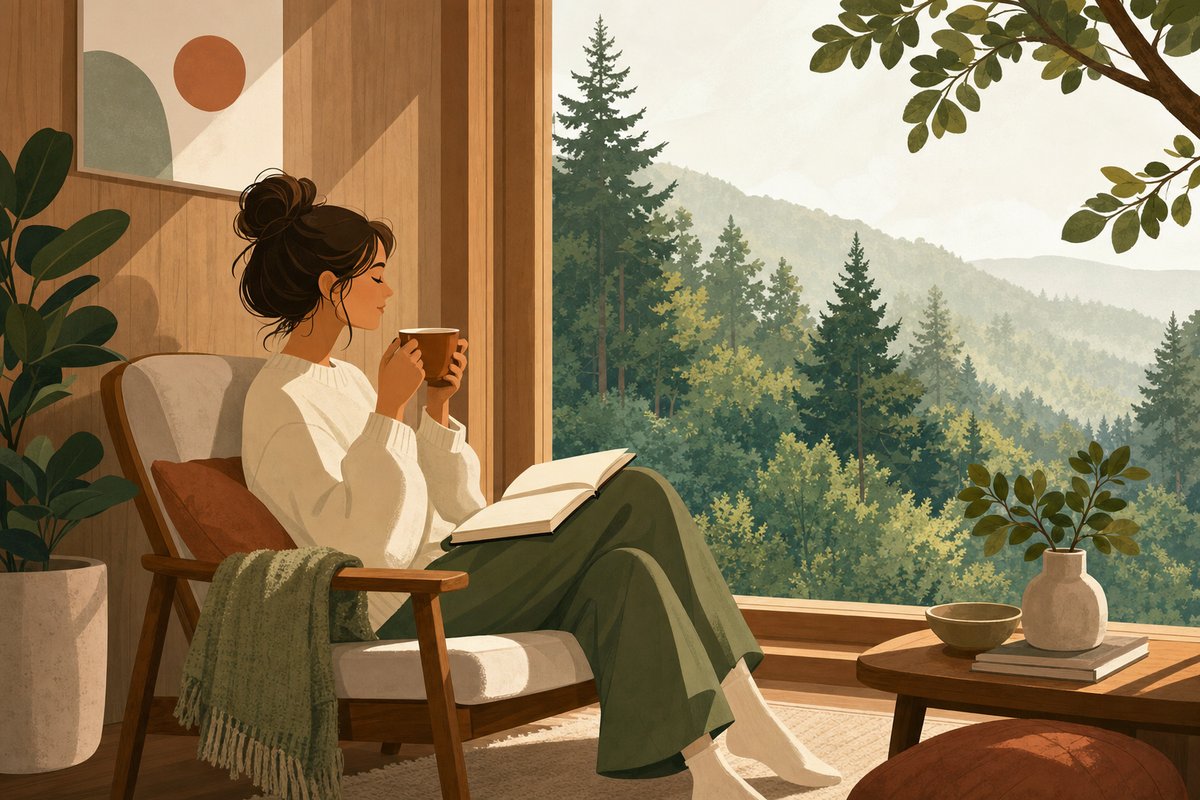
“Can a few days really change anything?” — a fair question. I was skeptical too. So let’s look at the evidence.
In a 2017 observational study from RMIT University, Cohen and colleagues tracked guests through a week-long residential wellness retreat: statistically significant changes appeared across 37 psychological and physical measures, and 17 of them were still holding six weeks later — along with lower weight, waist circumference, and blood pressure.
One study is one study, so consider the 2018 systematic review by Naidoo and colleagues: across 23 studies, including eight randomized controlled trials, residential retreats showed meaningful benefits for physical and mental health (the authors also note that larger, longer studies are needed — an honesty that makes the field easier to trust).
And nature itself pulls real weight. A 2019 University of Michigan study (Hunter et al.) found that just 20–30 minutes in a natural setting lowers cortisol — the body’s main stress hormone — at its steepest rate. Japan’s forest-medicine research (Li et al.), the science behind shinrin-yoku, has repeatedly shown forest environments lowering cortisol and raising natural killer cell activity.
What happens on a retreat is not “just a feeling” — it is a measurable, actively researched phenomenon. That said, retreats are not medical treatment, and individual experiences vary.
Here is the everyday version: that moment at night when you realize you have been staring into a campfire, silent, for half an hour. That state almost never happens in a city. A retreat builds that state on purpose instead of by accident.
What a retreat day actually looks like
Waking the body
Meditation and breathwork in the morning light, gentle movement. Touching your own senses before you touch your phone.
Time in the forest
Walking among trees, listening to the streams, simply sitting. Unhurried, nourishing meals.
Turning inward
Fire circles, journaling, sound sessions. Putting the day’s feelings into words, and letting them go.
Notice what is missing: effort. A retreat is one of the few places where not-trying is taken completely seriously.
How to choose well — five things to look for
- A clear purpose — recovering from fatigue and re-examining your life are different goals, and they point to different places
- Depth of nature — if the grounds border a tourist strip, your attention never fully switches over; the depth of the forest is the depth of the experience
- Small groups — big programs mean constant stimulation, which keeps you facing outward instead of inward
- Guidance — nature alone fades fast once you are home; look for a program designed to carry the experience back into daily life
- Unscheduled space — an over-planned retreat is just your busy life transplanted; make sure doing nothing is on the agenda
Doing this in Japan — the Yatsugatake option
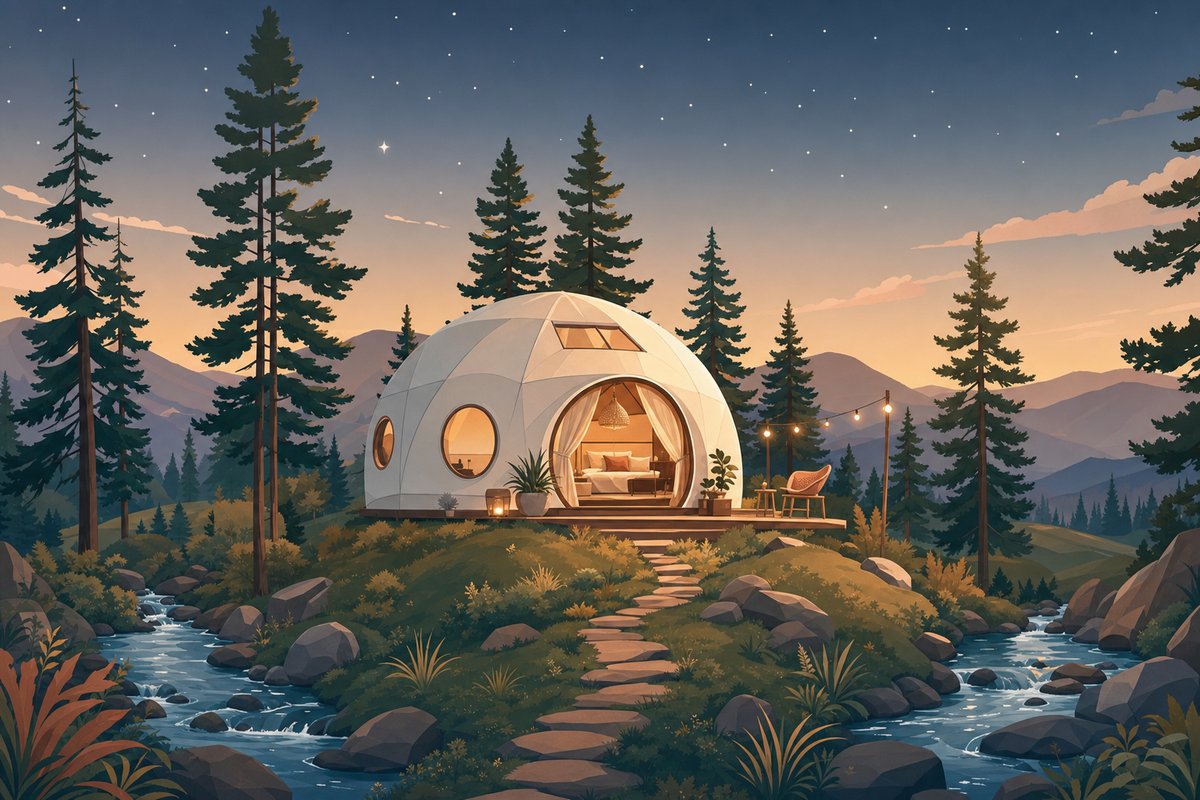
If you are looking for a retreat in Japan, the Yatsugatake mountains hit a rare balance: about two hours from Shinjuku by express train, yet the highland forest at around 1,000 meters is another world in air, light, and sound.
This is where we — nehan — opened our retreat center, on a forested hill of roughly 20,000 square meters in Kobuchizawa, held between two streams, with a large white retreat dome at its heart. Our signature 3-day, 2-night program guides you through your whole life with breath, sound, and nature — read about the journey here.
Is this for you?
- You rest and rest, and the tiredness never quite lifts
- Hot springs and massages feel like patches, not repairs
- You have been too busy to know what you actually feel
- You are at a turning point and want to stop and look at your life
- You are drawn to meditation or breathwork but cannot sustain it alone
FAQ
Q: How long should a first retreat be?
A: Research reports broad changes from week-long stays, but two or three nights is enough for the autopilot of daily life to switch off. Start there.
Q: Is it strange to come alone?
A: Not at all — solo participants are the majority, and being alone often makes it easier to turn inward. A small-group setting keeps solitude from tipping into loneliness.
Q: How long does it last?
A: Studies have measured benefits persisting six weeks after a retreat. The bigger variable is whether the program gives you practices — breath, reflection — that survive contact with everyday life.
By now you may be wondering what to actually do, and in what order. Carrying that restored state back into daily life follows a sequence — and the part we could not fit into this article, the actual practice and experience of it, is what we share in our free online lessons.
FREE PROGRAM
A doorway to seeing your life anew — through the body
Add us on LINE to receive the free online lessons — the parts we couldn’t fit into this article.
Free to join, unsubscribe anytime. This is not medical treatment; results vary by individual.
References
- Cohen M. et al. (2017). Do Wellness Tourists Get Well? An Observational Study of Multiple Dimensions of Health and Well-Being After a Week-Long Retreat. The Journal of Alternative and Complementary Medicine.
- Naidoo D., Schembri A., Cohen M. (2018). The health impact of residential retreats: a systematic review. BMC Complementary and Alternative Medicine.
- Hunter M.R., Gillespie B.W., Chen S.Y. (2019). Urban Nature Experiences Reduce Stress in the Context of Daily Life Based on Salivary Biomarkers. Frontiers in Psychology.
- Li Q. (2022). Effects of forest environment (Shinrin-yoku / Forest bathing) on health promotion and disease prevention. Environmental Health and Preventive Medicine.
- Retreats are not medical treatment; individual experiences vary.