


Key points of this article
- The emptiness isn’t because your child is gone. It’s because the role of “parent” has been pulled out.
- Cramming in hobbies doesn’t fill it because free time was never the problem. You just don’t yet know the self that exists without the role.
- First, admit the loneliness. Then, using your years as a parent as the base, gather small actions that let your body relax. If you keep sliding back when you’re on your own, a few days away is one option.
Since my child left home, it feels like there’s a hole in my chest. Is this empty nest syndrome?
What is empty nest syndrome, and is it a real diagnosis?
I’m writing this as someone who listens to parents who have sent their children off. To be honest, empty nest syndrome isn’t an official medical diagnosis.
It’s a natural reaction that many parents go through after a role ends.
Loneliness, tears that come out of nowhere, no motivation to do anything. It isn’t weakness. It’s what a body does when the job it ran on for twenty years is suddenly finished.
Why do I keep doing things like setting out two lunch boxes?
In the morning, you reach into the cupboard and take out two lunch boxes before you catch yourself. That isn’t laziness or self-indulgence. Your body still remembers “the movements of a parent,” that’s all.
You probably know this already, but it bears saying plainly. The loneliness is proof of how seriously you did the job. Nobody who did it halfway feels it this hard.
How is empty nest syndrome handled in a medical setting?
In medical settings, it is sometimes treated as an adjustment disorder or a depressive state. For people in their 40s and 50s, it also overlaps with menopause, a time when it’s hard to tell it apart from physical symptoms.
So if the heaviness in your body and the heaviness in your mood arrive together, that isn’t unusual. It’s one reason to mention both when you talk to someone.
People tell me to start a hobby or take a class, but nothing appeals to me. Why?
- The role falls away — It ends while your body still remembers the “parent” movements
- The ground shakes — What opened up wasn’t time but “who you are”
- Plans don’t fill it — There’s no circuit yet for doing things for yourself
- Gather again from the body — Small actions that bring relief become the new ground
Why doesn’t filling my calendar fill the hole?
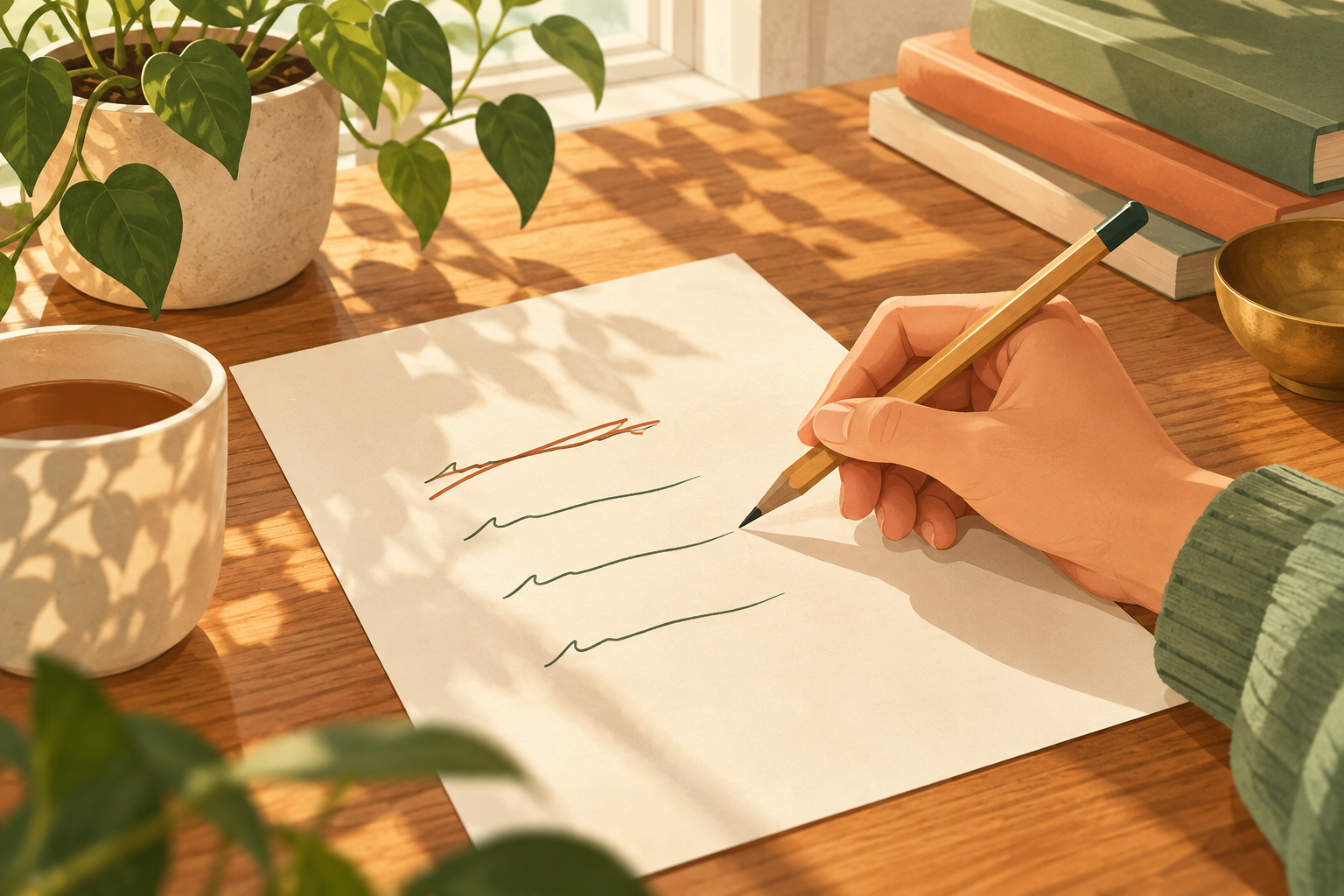
What opened up isn’t time. It’s the ground beneath you — the sense of “who am I.” If you add plans while that ground is missing, everything feels like it’s being done to you, and it doesn’t last.
You probably know this already. The class gets skipped by week three, and the guilt piles on top of the loneliness.
Is “just find a hobby” bad advice?
The advice “find a hobby and it’s solved” — I think it’s half wrong. A body that has moved “for the children” for years doesn’t yet have a circuit for “for myself.” Boredom isn’t what you’re up against.
So no matter how full the schedule gets, the shape of the hole doesn’t change. You can be busy every evening and still feel it on the walk home.
Do the years I spent as a parent count for nothing now?
No. The years as a parent don’t go to zero. The hands that packed lunches every morning, the body that got up in the middle of the night.
The ground for whatever comes next is closer if you pick it back up from the years you already have than if you search for something brand new. You aren’t starting from scratch, even when it feels that way.
When I don’t know what I’m living for, is there anything I can do on my own?
What are three things I can try at home?
There are three. What they share is one trick: don’t try to produce the answer in your head.
Write without “for my child”
Write down how you feel now, on paper. Whenever your child’s name appears, cross it out once, and look at the words that remain.
Set a period of not trying
Decide, “For three weeks I won’t start anything.” Simply giving yourself permission tends to change how much hurry you feel.
One action a day that loosens the body
Sink into the bath up to your shoulders. Open a window and breathe out slowly. Small is fine.
What if nothing comes to me even after trying?
I think the answer is something that “remains” rather than something you “find.” The words left on the page after the crossing-out are probably your ground.
Some nights it won’t work. The paper stays blank, or you cry instead of writing. That’s all right. The crossing-out itself is the work.
FREE PROGRAM
A doorway to seeing your life anew — through the body
Add us on LINE to receive the free online lessons — the parts we couldn’t fit into this article.
Free to join, unsubscribe anytime. This is not medical treatment; results vary by individual.
How long will this loneliness last? Should I see a doctor?

How long does empty nest syndrome usually last?
Empty nest syndrome varies a lot from person to person, and for many people the waves are said to get gradually smaller. But there is a guideline.
Two weeks or more of not sleeping, not eating, or daily life breaking down. If that’s where you are, it’s time to talk to a psychiatrist or a mental health clinic.
Is going to the doctor the same as giving up?
Your 40s and 50s overlap with menopause. If you also mention physical complaints — palpitations, heaviness, fatigue — it becomes easier to sort out what’s what.
Seeing a doctor isn’t a defeat. It’s having someone measure the height of the wave for you, so you aren’t guessing alone at the kitchen table.
What’s the difference between facing it alone, consulting a professional, and joining a retreat?
How do the three options differ?
The difference between the three comes down to “safety” and “whether you can face it with your whole body, not just your head.”
Facing it alone suits lighter waves, and you can start at zero cost. Its weakness is that the same thoughts tend to go round and round, especially at night.
When is a professional or a retreat the better fit?

Consulting a professional suits you when not sleeping or not eating continues. The cost is the time it takes to attend and the effort of finding someone you click with.
Joining a retreat suits you when thinking hasn’t gotten you out and you want to approach it through the body. The catch is that you need an eye for choosing well.
How do I decide which one is right for me?
There’s no single correct answer. You decide by the height of the wave you’re in right now.
If you’ve already had many of those moments — walking back from the station after seeing your child off, and suddenly it gets hard — then honestly, the head alone is unlikely to get you out.
I understand all this, but the moment I’m home the same emptiness comes back.
Why does the house pull me back into the old pattern?
Your home is a place soaked through with “the self as a parent.” Every time the barley tea pitcher in the fridge catches your eye, the old circuit fires on its own.
Changing that with thinking alone is hard. You know the dishes you reach for, the hour you glance at the clock for a door that no longer opens.
Isn’t this just an ad for a retreat? Who is it actually for?
The suspicion “so this is just a retreat pitch, right?” is fair. So let me set out, up front, only the conditions for someone it suits.
- Symptoms aren’t severe (you aren’t in a state that calls for seeing a doctor first)
- You can take two or three days alone
- You intend to keep going after you return
- You’d rather confirm it with your own senses than take someone else’s answer
I’ve written in detail about why the self gets further away the more you think in The limits of introspection and how to notice through the body.
How do I choose a retreat safely?
What five things should I check before booking?
There are five measures. The organizer’s background. Whether you can stop partway through. Fees and cancellation terms. What follow-up exists after it ends.
How intense the breathwork is and whether someone accompanies you.
If the answers are vague, don’t choose it. That rule alone removes most of the risk.
What if I find it awkward to ask?
Before you contact anywhere, ask these five. If asking feels hard, send them the five questions for spotting a dubious retreat exactly as they are.
A place that handles plain questions badly before you arrive is telling you something about how it handles people once you’re there.
What is nehan’s Soumatou retreat like? Is two nights and three days too much to start with?
What actually happens over the three days?
nehan’s Soumatou retreat is two nights and three days in Kobuchizawa, Yamanashi. Then fourteen days after you return, in which you bring one change back into daily life.
It isn’t a trip for resting at an inn. You put physical distance, for a while, between yourself and that barley tea pitcher at home. What happens there is different for everyone.
Who should not go?
nehan’s retreat doesn’t suit everyone. If your symptoms are heavy — not sleeping, not eating for an extended stretch — please see a doctor first. If you can’t leave the house for a few days, now isn’t the time either.
Worries about travel and scheduling are covered in How to get from Tokyo to Yatsugatake for two nights and three days.
How can I check whether it fits before deciding?
Read what participants have said first. You can confirm what’s involved, and whether it suits you, at an assessment session before deciding anything.
Nobody there will tell you what your emptiness means. That part stays yours.
FAQ
Q: How long does empty nest syndrome last? A: It varies a great deal, and for many people the waves are said to gradually get smaller. If you can’t sleep or can’t eat for more than two weeks, talk to a professional.
Q: Is empty nest syndrome just self-indulgence? A: It isn’t. It’s a natural reaction when a role you held for many years ends suddenly. Some people feel it hits harder precisely because their sense of responsibility was strong.
Q: Won’t I just go back to how I was after the retreat? A: Sliding back is common; that’s the truth. The difference comes from how you spend the two weeks after returning and whether there’s follow-up.
See also What happens after you get home.
The self that remains after the role is gone gets further away the harder you search for it in your head. So here I’ve written the order the other way round: start from your years as a parent, and gather yourself again through the body. A summary of ways to face yourself may also help.
FREE PROGRAM
A doorway to seeing your life anew — through the body
Add us on LINE to receive the free online lessons — the parts we couldn’t fit into this article.
Free to join, unsubscribe anytime. This is not medical treatment; results vary by individual.
Sources / References
- Ministry of Health, Labour and Welfare, “Kokoro no Mimi” (Japan): empty nest syndrome is not an official diagnosis and is sometimes treated as an adjustment disorder or depressive state; insomnia or low mood lasting two weeks or more is a guideline for seeking medical care
- J-STAGE, “The Position of Empty Nest Syndrome in Cases of Climacteric Indefinite Complaints”: in the 40s and 50s it overlaps with menopause and is difficult to distinguish from physical symptoms
- nehan official, “Soumatou wo Miru Tabi” (the Soumatou retreat): Kobuchizawa, Yamanashi; two nights and three days; 14 days of integration after returning
This article is general information and not medical advice. Results vary from person to person. If you have concerns about your health, please consult a qualified professional.




