

I’m kind to everyone else, but I always put myself last. What can I do?
What does “taking care of yourself” actually mean?
Taking care of yourself means noticing your own state through your body, and answering it in a small way. Before you try to change how you think, you pick up the physical signals first: heavy shoulders, a tightness in the chest, the breath that goes shallow when a message you haven’t answered sits on your phone.
You probably know this already. The hard part isn’t understanding it. It’s that your attention goes to other people before it ever gets to you.
What can I start doing today?
There are three habits you can begin tonight: write down how you feel, block out rest time before anything else, and say one small “no.” None of them need special equipment or a free weekend.
If you tend to drift back to old patterns when you’re on your own, there are other options too: a professional you can talk to regularly, or a few days away from daily life to face yourself with a guide.
This article walks through why you end up last, the three habits, and how to compare your options when things don’t stick. It isn’t medical advice. It’s a set of measuring sticks so you can choose for yourself.
Why do I end up last when I’m kind to everyone else?
Why does helping others feel safer than resting?
You end up last because being useful to other people has felt safe for a long time. That’s a habit, not a flaw, and once you see it, you can loosen it.
Research suggests that people who are hard on themselves tend to assume that being kind to themselves would mean going soft or slacking off (Neff). If that sounds familiar, it may help to know the belief itself is common, and that it tends to work against the very discipline it’s trying to protect.
Why don’t I notice my own tiredness until it’s too late?
The second reason is that you notice how other people are doing before you notice how you are doing. Someone’s face is right in front of you. The weight in your own shoulders isn’t visible unless you deliberately turn your attention to it.
It’s not that you lack the ability to look at yourself. It’s that you’re looking in a particular order, and you come after everyone else. To change that order, you need a cue that arrives before your judgment does. That cue is physical sensation.
What does taking care of yourself look like in practice?
What are the two things I’m actually practicing?
In practice it comes down to two moves: noticing, and responding in a small way. Noticing means putting words to what’s there. “My shoulders are heavy right now.” “I’m a bit rushed.”
Responding means acting on it, even slightly. If you’re tired, sit down for five minutes. If someone asks for something, don’t answer on the spot; say “Can I get back to you?” and set it down for a moment.
The direction is toward answering, not toward enduring.
How do I start? Try keeping a record for one week
The simplest way in is to keep a record for one week only. When you wake up, take one minute to check where your body feels heavy and what your mood is like.
Rate your morning mood on a three-point scale, and the heaviness in your body on a three-point scale. That’s all.
After a few days you’ll start to see your own patterns. “Friday nights are always heavy.” “The day after I see people, my mood drops.” “I stop at the convenience store on the way home when I’m more drained than I thought.”
What do I do once I see a pattern?
Once a pattern is visible, you can make a reasonable guess about what’s costing you. You don’t have to remove every cause. If you find one thing you could reduce, that’s your lead.
That one spot is where you answer first.
What three things can I do starting today?
What are the three easiest habits to begin with?
Here are three, listed from easiest to hardest. No special place or tools required.
- Write three lines before bed. Note what you felt today, without judging it as good or bad. “Tired.” “A little happy.” That alone gives the feeling a name.
- Put fifteen minutes of doing nothing into your schedule first. Don’t wait for a gap to rest in. Book it ahead of time. Lying down counts.
- Say one small “no” or “can that wait?” “I’m leaving early today.” “Can that be tomorrow?” One is enough.
How do I know which one is right for me?
For all three, let your body’s sensations guide you rather than your reasoning. “My chest tightened.” “My shoulders dropped.” Those reactions are usually closer to your real answer than whatever your head concludes.
If something makes your breath loosen, it’s probably the right one to keep.
FREE PROGRAM
A doorway to seeing your life anew — through the body
Add us on LINE to receive the free online lessons — the parts we couldn’t fit into this article.
Free to join, unsubscribe anytime. This is not medical treatment; results vary by individual.
I know what to do, but I can’t do it, and then I blame myself. What should I do?
What do I do when the critical voice shows up?
When the voice that blames you shows up, all you need to do is notice it: “There it is again.” On a day you didn’t manage anything, the moment you noticed is already a step.
You don’t have to be perfect. Decide at the start that twice a week is enough. That way, a missed day is just a missed day, not evidence against you.
Does being kind to myself actually help, or is it just an excuse?
Research suggests that treating yourself with compassion, rather than harshness, is associated with behavior that lasts longer and with a steadier mood (Neff).
Being hard on yourself may feel like discipline, but the evidence points the other way.
What are the limits of doing this on my own?
To be honest about the limits: the things you can do by yourself cost nothing and can begin today. But they don’t work the same way for everyone. If what you’re feeling is severe, help from a professional comes first.
Doing it alone, seeing a professional, or joining a program: what’s the difference?
Who is each option for?
The difference lies in how intense things are right now, and whether you have a structure for keeping it going. You can also combine them.
Doing it on your own suits people who want to start small. It costs nothing and begins today. What to check: do you have a way to stay with it, such as a record or someone else doing it alongside you?
Working with a professional, such as a counselor, suits people who are struggling intensely right now and want to talk on a continuing basis, often weekly.
What to check: insurance coverage, cost, and whether the fit feels right.
Joining a program suits people who understand the issue in their head but want to face it through the body. It lets you spend a few concentrated days on it.
What to check: is there a structure for continuing after you go home?
How do I decide?
If you’re unsure, decide by how hard things are right now. If it’s intense, a professional comes first. If you understand it intellectually but your body isn’t following, a program becomes a reasonable candidate.
On my own, I slip back after a while. What can I do?
Why do I keep slipping back?
You slip back because daily life keeps the same scenes and the same relationships in front of you. When the environment stays the same, your habits get pulled back in the same direction.
This isn’t a problem with your character.
When is stepping away for a few days worth considering?
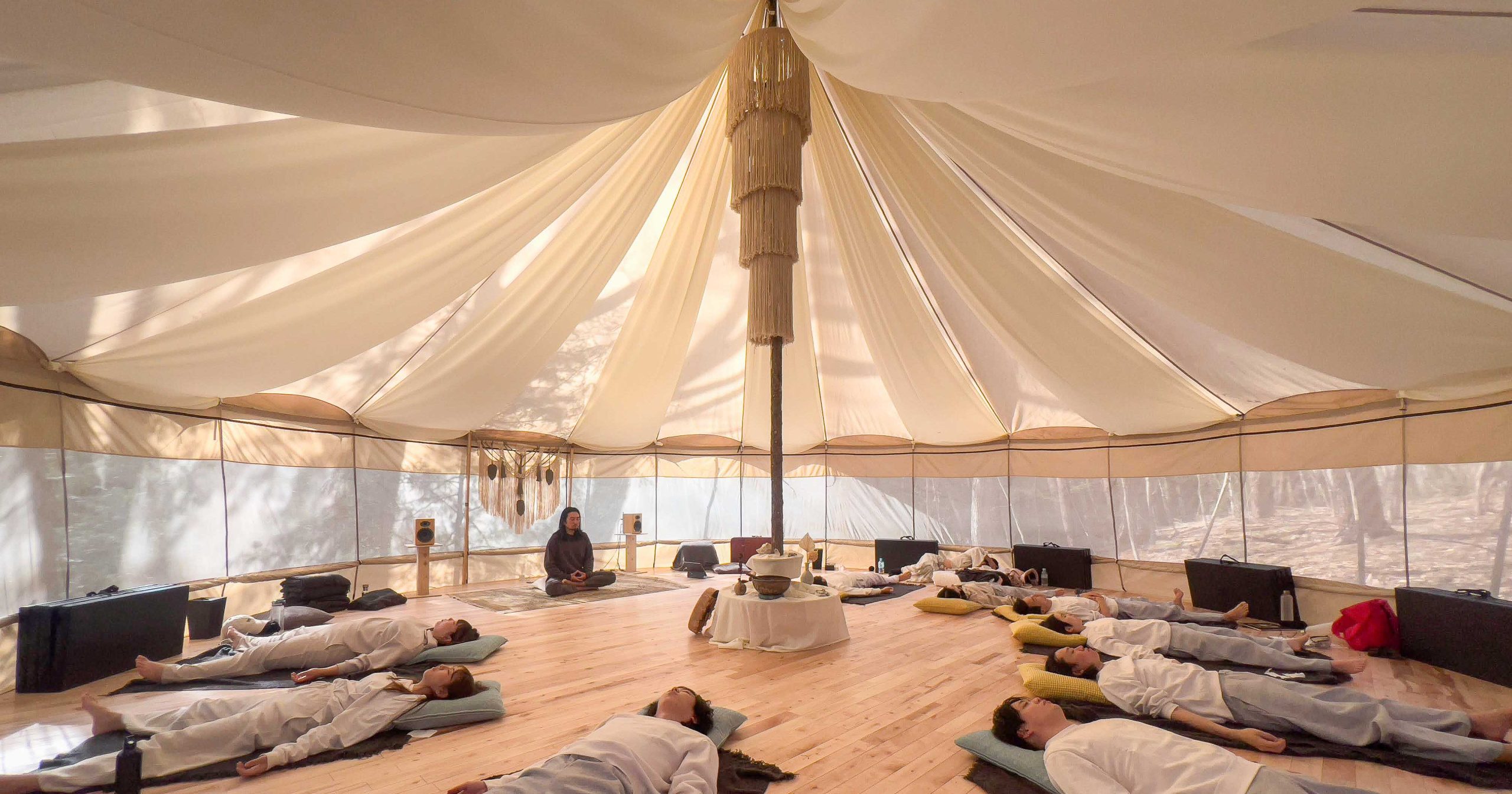
For people who meet the conditions, a self-transformation retreat, a few days away from daily life with a guide, is one option. It suits people who already understand their situation and want to approach themselves through physical sensation.
It does not suit people who need medical support right now.
Neither path is better than the other. You choose based on your state today. If it doesn’t fit, you don’t have to choose it, and you are always free to decline.
A fuller overview is in [How to Choose a Self-Transformation Retreat](/self-transformation-retreat/).
When choosing a program like that, what should I look at to stay safe?
What five things should I check?
Whatever the program, there are five things to look at. First, is the background of the organizer and guides written down? Second, can you say “I’m stopping” partway through?
Third, are the fees and cancellation terms clearly stated? Fourth, is there follow-up after it ends? Fifth, how intense is the breathwork, and is someone there with you?
What if any of them is unclear?
If even one of these is vague, ask before you take part. If it doesn’t feel right, you don’t have to choose it. And you have the freedom to stop in the middle.
A program that doesn’t welcome those questions is telling you something.
Is it okay to go straight into nehan’s three-day, two-night Soumatou journey?
Do I have to decide right away?
You don’t have to decide now. You can attend a [consultation session](/soumatou/) first, hear how it works, and decide afterward. Fees and other details are explained there.
Deciding not to take part because it doesn’t feel right is also a correct choice.
What does the program actually involve?
The Soumatou journey is a three-day, two-night residential program in Kobuchizawa, Yamanashi. It doesn’t end when the three days do. It comes with a fourteen-day integration period, the time it takes to settle back into daily life, so there is support until you’re home again.
Check it against the five measuring sticks above and judge for yourself. [Stories from people who took part](/stories/) are there if you want them.
A note: nothing here is medical advice. Results vary from person to person, and if you are in distress, please reach out to a qualified professional first.
FAQ
Q: Isn’t taking care of myself just being selfish?
A: They’re different things. Noticing your state and answering it is the foundation for having room to treat others well. Staying kind to people while running on empty is what doesn’t last.
Q: Which is better, counseling or a retreat?
A: If things are intense right now and you want to talk regularly, a professional comes first. If you understand it in your head and want to approach it through the body, a program is a better fit. Some people combine both.
FREE PROGRAM
A doorway to seeing your life anew — through the body
Add us on LINE to receive the free online lessons — the parts we couldn’t fit into this article.
Free to join, unsubscribe anytime. This is not medical treatment; results vary by individual.
Sources / References
1. Neff, K. D. Self-Compassion research summary (self-compassion.org). 2. nehan official page, “Soumatou Journey” (/soumatou/)