

Key points in this article
- When people in their thirties feel tired of life and still don’t feel lighter after resting, it is not always because their schedules are too full. It may be closely related to the brain staying in a state of alert.
- A retreat is different from sightseeing or a change of pace. It is time set aside to create some distance from your usual roles and automatic ways of reacting.
- When choosing one, it helps to look beyond what you will get to experience. Consider what kind of space you may be able to bring back into everyday life.
It is 10 p.m. on a Friday. You are on the sofa with a video playing in the background, and you open your phone thinking, *I’ll just check the work chat once.*
You only meant to look for a moment. Then forty minutes have passed. No one has replied. Yet in your mind, Monday’s meeting, the rent, calling your parents, and the unread LINE message are all waiting in line like customers at a checkout counter.
Have you ever had that? It is your day off, but it does not feel restorative. You slept, but by Monday morning you are already tired again. Even while looking at a travel booking page, you are thinking, *I’ll have to reply to that when I get back.* Your body is in bed, but your mind is still on shift.
The exhaustion behind searches like “tired of life in my thirties” is often a little different from simple sleep deprivation. You sleep. You travel. And as the next obligation approaches, the old heaviness returns. If someone asks what you want to do, you cannot quite answer. But you know you do not want things to continue like this. You are left hanging there.
I think the idea that “you can still push through in your thirties” is careless. More than careless, really.
Your responsibilities at work expand. Questions around a partner, children, and your parents suddenly stop being things for “someday.” It is no longer like your twenties, when sleeping until noon on the weekend could reset everything.
There are days when you pick up a hot coffee at a convenience store register after working late and, for some reason, feel as if you might cry. It is not that the coffee moved you. The reasons are not just one thing, so you cannot explain them neatly. People who are truly tired are often the ones who struggle most when asked, “What are you tired from?”
It is not only work. It is not only relationships. It is the whole experience of hurrying your own life along, all the time.
Sometimes fatigue is not in the body first—it is in the constant responding
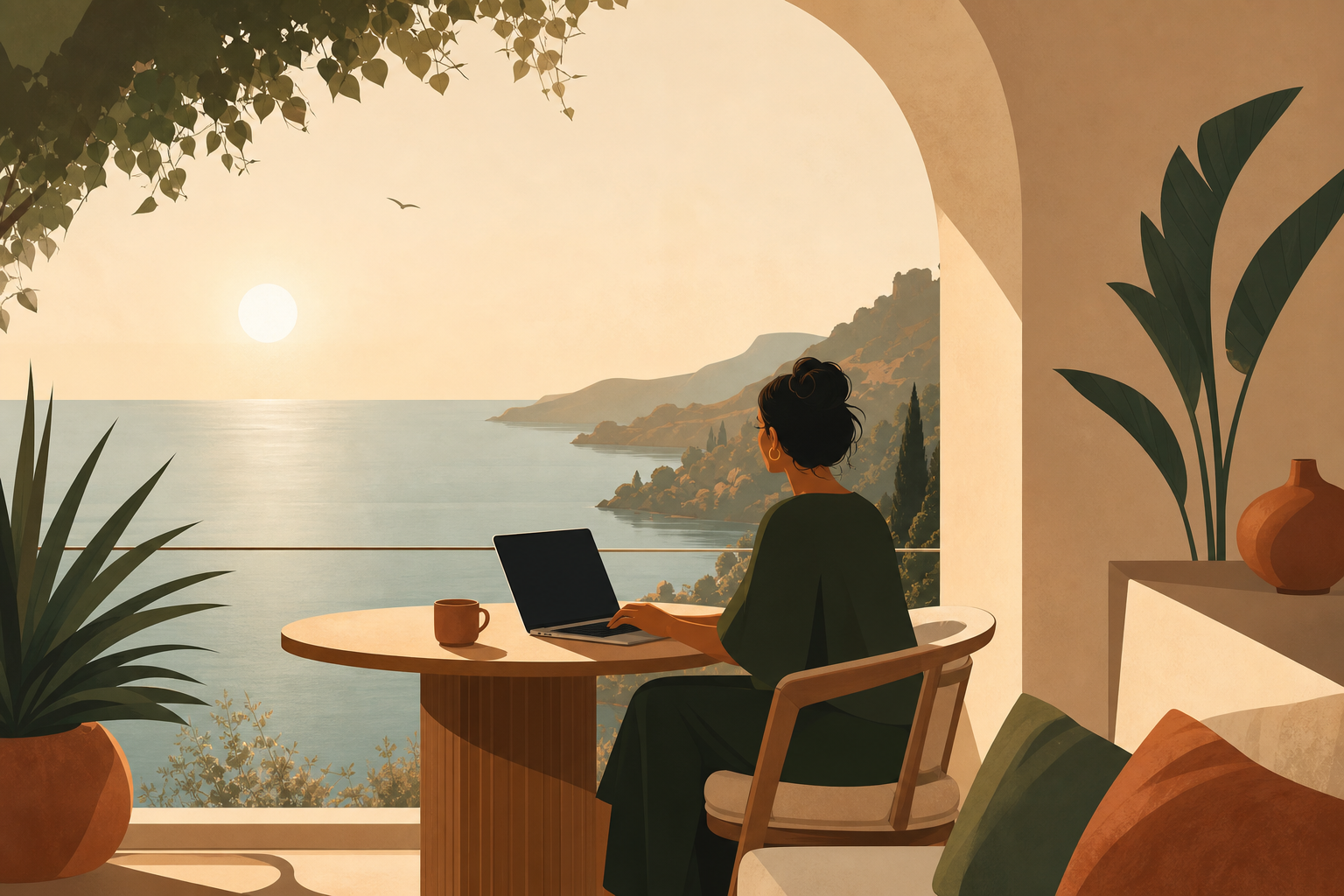
It is natural to think of fatigue as a low battery. If the battery is low, recharge it: sleep, eat, take time off. Of course, those are the foundation. If you are sleep-deprived and someone tells you to “look inward,” the reasonable response is: please let me sleep first.
But through hosting retreats and listening to people who are worn down, I have come to feel that fatigue has another layer.
When chronic strain continues, the brain and body keep making adjustments in preparation for danger. Research refers to this as allostasis, and to the accumulated burden as allostatic load. When stress-related hormones and shifts in the autonomic nervous system remain activated for a long time, the signal to “prepare for what comes next” may linger even during periods of rest.
In other words, if you are exhausted but cannot rest, it is not necessarily because you are bad at resting. The alarm system in your body may simply not have clocked out yet.
Imagine receiving a message from your manager at 8:42 on a Monday morning, standing on the train platform: “Can we talk a little today?” There is no explanation. Still, your upper stomach tightens. You suddenly remember a mistake from last year. Before the train arrives, you have already invented several versions of the worst possible outcome: *Did I do something?*
This is not necessarily because you have a negative personality. It is closer to the brain filling missing information with memories of past danger and trying to get ahead of it. For a brain built to predict, that is understandable. But from the inside, it is exhausting. Nothing has even happened, yet your body feels as though it has already been reprimanded. You probably know this.
Studies have also reported that under intense stress, the amygdala’s alarm response can become heightened while the prefrontal cortex—important for planning and perspective—becomes more easily disrupted. So when you tell yourself, “Calm down and think clearly,” the part issuing that instruction may itself be depleted.
It is like having 3% battery on your phone while opening maps, video, payment apps, and your work chat all at once. Of course it slows down. This is not a matter of willpower.
POINT
“Not wanting to do anything” is not necessarily evidence of laziness. It can be a nervous system that has spent too long choosing, staying alert, and taking care of others—and has started rejecting any further input.
It is Sunday night. There are dishes in the sink: two glasses and a few plates. You know they would take fifteen minutes. But you cannot get yourself up. And then you get a little angry with yourself for not getting up.
Often, though, this is not really about the dishes. You have been deciding what to eat, how to reply to people, what time to leave tomorrow, what to say in a meeting. A mind that has been deciding all day does not want one more choice. Even whether to wash a glass becomes the final question.
Can you explain the tiredness you are carrying with sleep deprivation alone? If not, then alongside resting your body, you may need to rest the part of you that has been responding without pause.
Why is your mind still at work when you are on holiday?
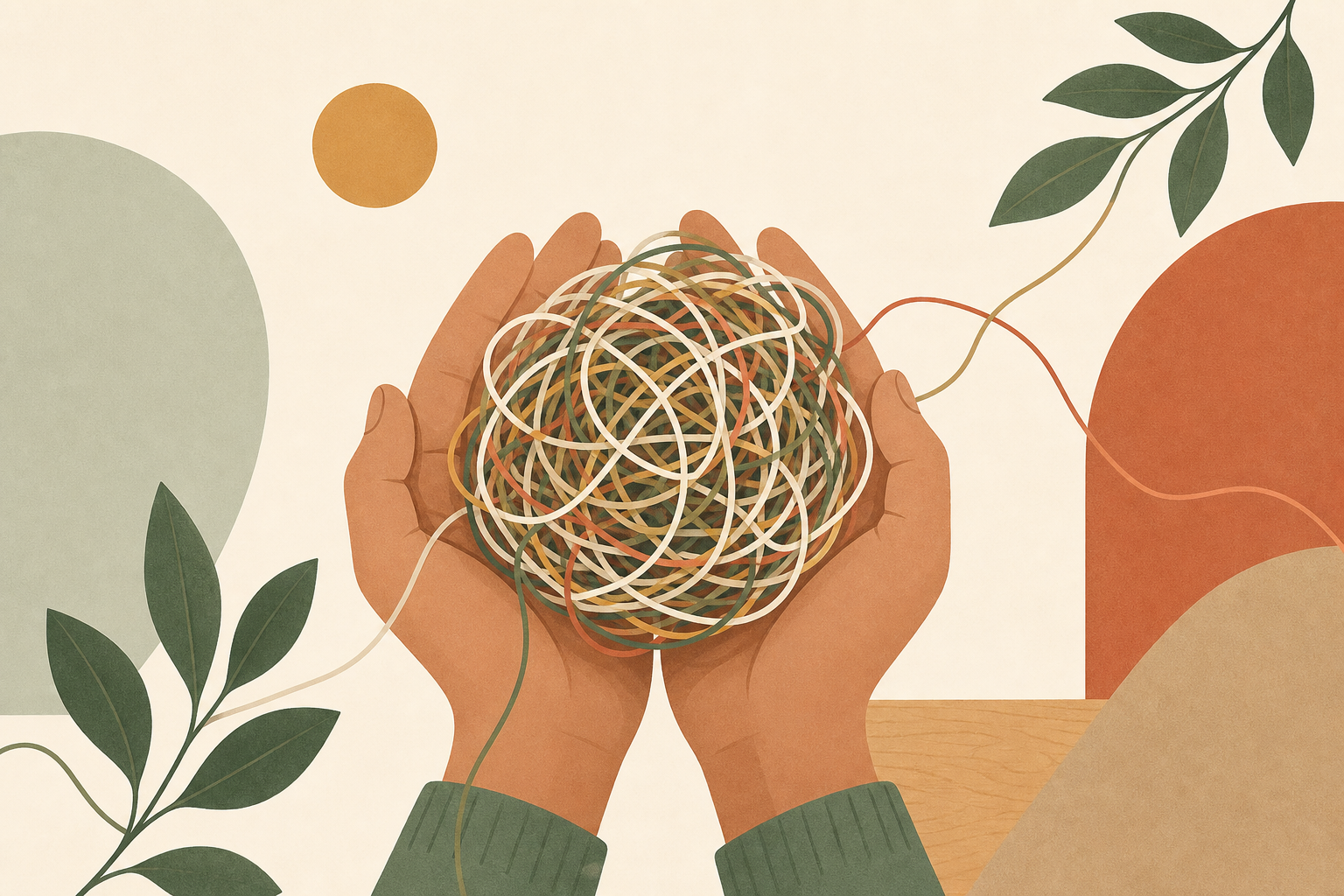
You arrive at a hotel overlooking the sea on a Saturday afternoon, and the first thing you open is not the view but your work laptop. There is a little time before dinner, you tell yourself, so you check your email. No notification has gone off, but you still feel drawn to look. While waiting for coffee at a café on your trip, you tap the round Slack or Teams icon.
Many people will recognize this kind of time off. The photos come out beautifully. But on the bullet train home, the moment you look at Monday’s calendar, your stomach sinks. *I had a good time. Why does it come back this quickly?*
This matters.
The brain has a network often called the default mode network (DMN), which tends to be active when we are not focused on an external task. It is involved in looking back at the past, simulating the future, and thinking about ourselves. This is a deeply human capacity. It is not the enemy.
But when fatigue is heavy, this activity can tilt toward repeating the same worries: *Was that reply strange? What if I change jobs and fail? What if this goes on for years?*
You are washing your hair in the bath, but your mind is revising Tuesday’s presentation. You are looking out a train window, while an internal postmortem of yesterday’s conversation has somehow reached its third after-party. Even in a place meant for rest, the meeting inside does not end.
This is why “just try not to think about it” is a difficult assignment. Tell someone not to picture a white bear, and a white bear appears. Trying to drive a thought away can mean monitoring it even more closely. The more often you check that you are “not thinking about work,” the more your mind retains a guard whose job is to watch for work. It is not a particularly funny system when you are living in it.
People often say that when you are tired, you should fill your schedule and get a change of pace. But I think that is only half true. A holiday packed with plans may simply overwrite vigilance with enjoyable events. You book three activities, reserve a popular restaurant, take photos, and produce a “fulfilling weekend.” But if it has become another thing to complete—as work often is—then for your brain, it is simply a different shift schedule.
If you are looking through your photos on the train home and your stomach gets heavy as Monday gets closer, perhaps stimulation was not what you needed. There is nothing wrong with fun. But for deeper fatigue, enjoyment alone may not reach far enough. I want to be clear about that.
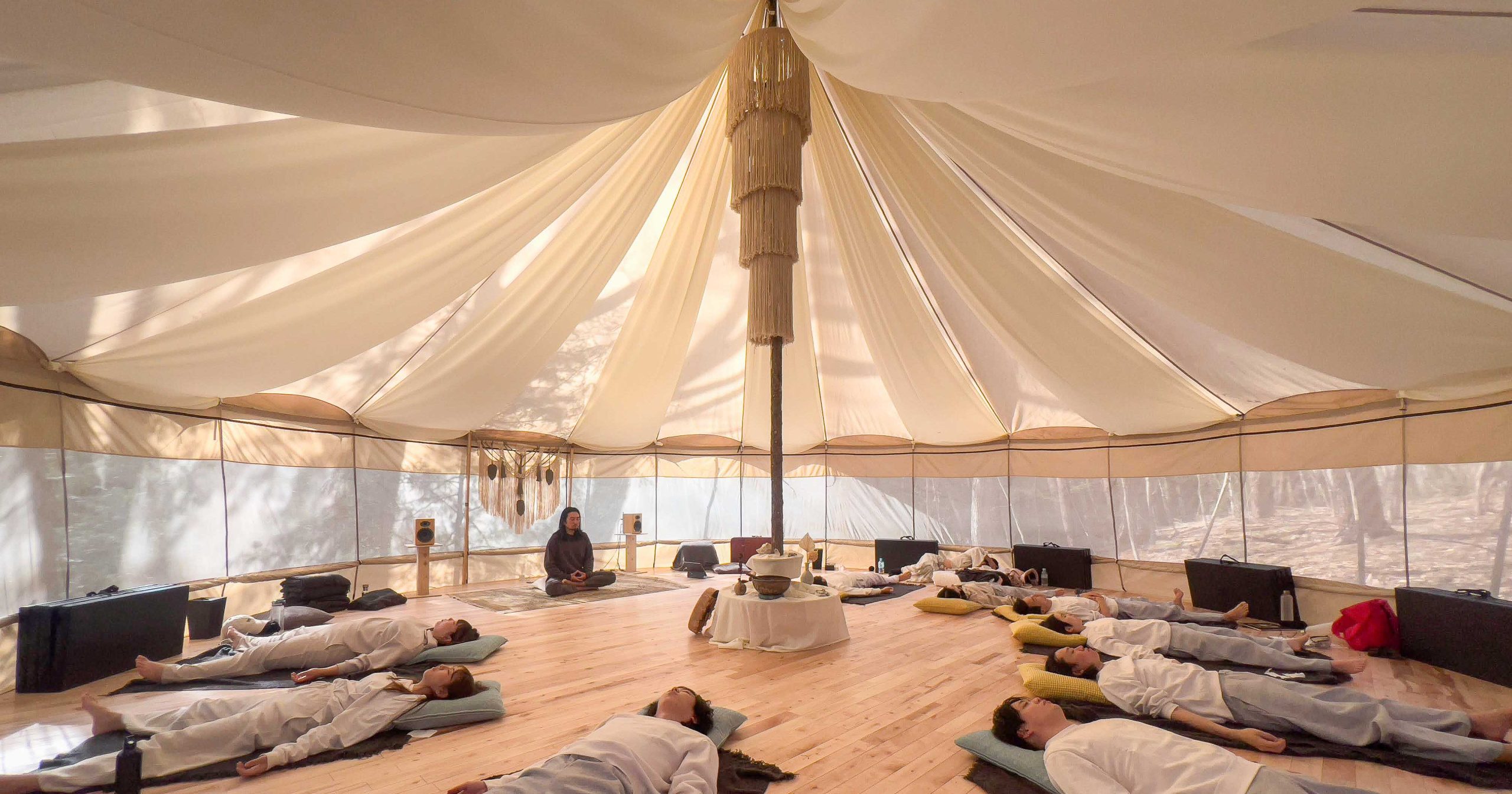
This is what a retreat works with. Not only physically stepping away from daily roles, but creating conditions in which you can notice the reflex to keep thinking, the reflex to accommodate others, and the reflex to rush yourself. A holiday and a retreat can look similar, but their aims are different.
- Sightseeing is time that directs your senses outward through unfamiliar places and food.
- A vacation is time that temporarily reduces the demands of work and household tasks.
- A retreat is time to observe the reactions that are harder to see in your usual environment, and to come into contact with inner tension.
- When choosing a retreat in your thirties, it may be worth looking for a thoughtfully designed setting where you will not be rushed, rather than focusing on luxury.
The uncertainty of your thirties is not always an inability to choose—it may be too many choices
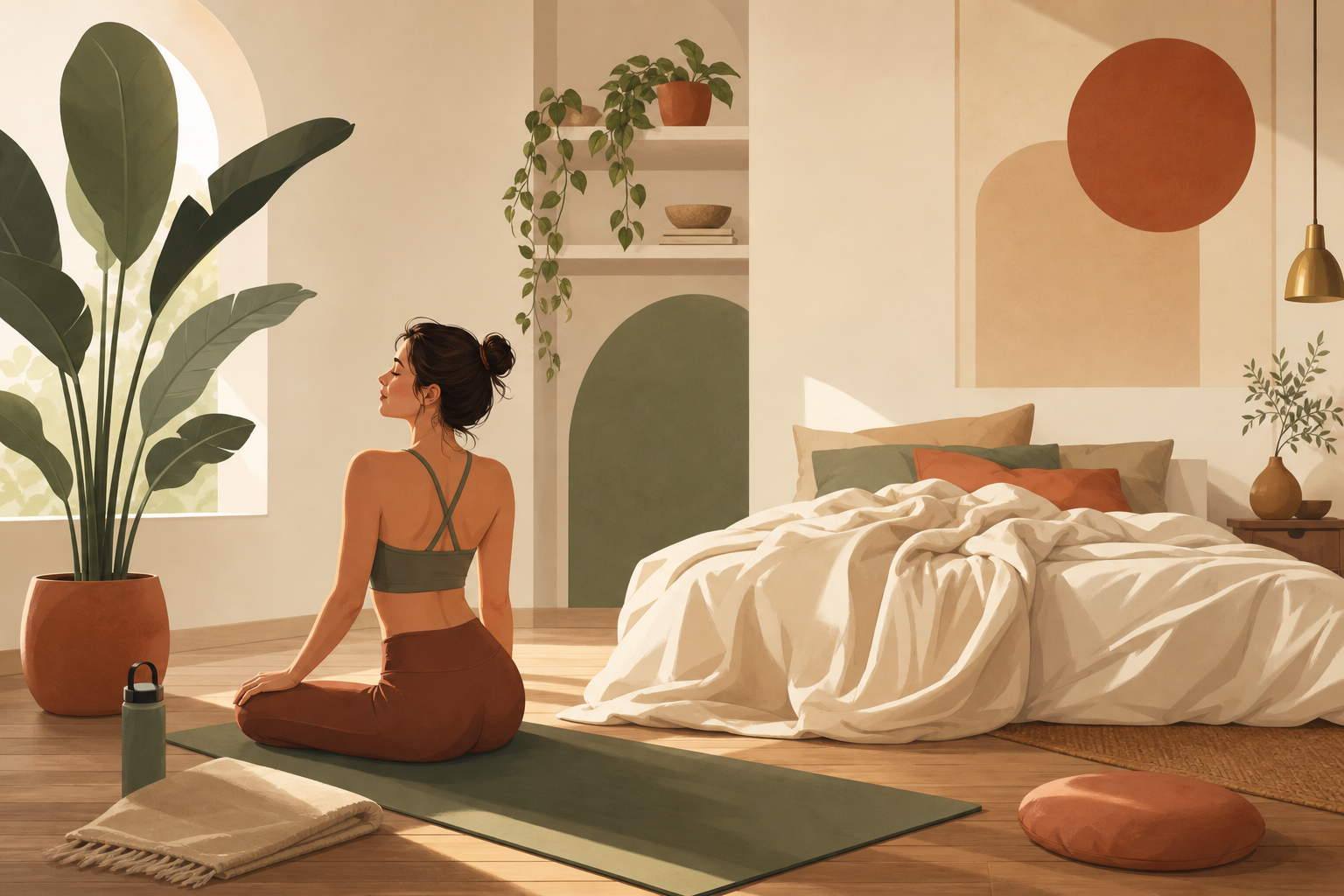
Your thirties can be a time when freedom feels as though it has narrowed. But it may not be that you have no freedom. It may be that you have more options that are difficult to let go of.
Stay at your current company. Change jobs. Get married. Do not get married. Have children. Do not have children. Move somewhere quieter. Protect the life you already have. Learn something new. Do nothing for a while.
No one else can make these decisions for you. And choosing one path can feel like closing off another possibility. So the more you try to decide, the more frightening it can become.
Some people say, “If you have choices, you are fortunate.” That is true. But having many options is not the same as finding it easy to choose. If someone hands you a hundred-page menu and says, “Pick whatever you like,” the hungrier you are, the harder it can be. The uncertainty of your thirties can feel much like that. It is not that you cannot choose. It is that there are enough possibilities to wear down your ability to judge.
Cognitive psychology includes the view that when choices continue, the quality and stamina of our decision-making can decline. At 6 p.m., standing in the prepared-food aisle at the supermarket, you cannot decide between fried chicken and grilled fish, so you put the usual boxed meal in your basket. It seems small, but it is the continuation of decisions that have been accumulating since the morning.
Have you ever felt suddenly drained when someone says, “Either is fine with me”? They may mean to be considerate. But on that particular day, being left with the final decision can feel heavy. It is not strange that there are nights when you cannot answer the bigger questions of your life.
Another thing that intensifies the difficulty is the distance between who you feel you should be and who you actually are. A coworker’s promotion. A house purchase on social media. Photos of a classmate’s children. The comparison switch turns on the moment you see them. You thought you were considering your own path, but somehow you are now staring at a scorecard.
Social psychology has shown that this kind of self-discrepancy can be associated with low mood and anxiety. *I should be doing better at work. By this age, I should already be there. I should not be resting.* The higher the ideal self, the more points your current self seems to lose. And you are both the examiner and the person being examined. That is a hard structure to live in.
Writing this, I realized that tiredness in your thirties often includes the fatigue of not having become someone. So when you rush to find an answer, you may end up evaluating yourself even more harshly. There is something cruelly ironic about that.
My view is that many modern struggles, when traced back far enough, arrive at not knowing your real self. I do not mean that as vague spiritual language. When you have spent a long time responding to other people’s expectations, society’s approved answers, and supposedly efficient choices, you can lose touch with what you genuinely dislike and what you genuinely want.
On Sunday night, you open a job site and close it again. Do you want to change jobs, or do you simply want to escape where you are? You cannot tell. You may also be unable to separate your own wish from the urgency you felt after seeing someone else’s post. You have probably been there at least once.
Work fatigue
The strain may not come only from workload, but from the prolonged tension of feeling that you cannot disappoint expectations.
Relationship fatigue
You keep choosing replies that will not make others dislike you, while your own feelings get pushed back.
Future fatigue
You compare too many possible paths and start feeling unable to step into any of them.
Fatigue with yourself
Even while resting, you judge yourself for not making the time “more meaningful.”
Three things to look at before choosing a retreat
Are you thinking, *Here comes another vague spiritual answer?* Honestly, that skepticism is healthy.
Forest, yoga, sauna, meditation—the word “retreat” covers too much. If you choose based on atmosphere alone, you may simply end up sleep-deprived somewhere far from home. Travel quietly takes energy: an early train, transfers, an unfamiliar pillow, plans the following day. If you do not feel restored after that, it is not because you failed.
I do not think a retreat is created simply by doing nothing in nature. Resting in nature has value in itself. But if you want to come into contact with reaction patterns that have been with you for a long time, you need safety and a thoughtful process. Offering a space that may touch something deep with nothing more than “feel free to do whatever you like” is like cooking without watching the heat. Even good ingredients can be ruined by careless handling.
Before choosing, these three points can make it easier to assess a retreat.
Space in the schedule
Look at whether the programme begins packing things in as soon as you arrive, or whether it allows time for tension to settle.
Safety of the setting
Check in advance whether it is small-scale, whether the facilitator’s approach is unhurried, and whether the design avoids pressuring people to do more than they can.
What you can take home
Rather than focusing on a high from the experience itself, consider how you might maintain some distance from your reactions in daily life afterward.
The first point—space in the schedule—can make more difference than you might think. If it is introductions immediately on arrival, then activities, then more programming after dinner, someone who already spends every day chased by obligations may simply start thinking, *I need to participate properly.* If you were worrying about laundry and work messages until the minute you left home, you are not going to relax ten minutes after arrival.
The second point, safety, cannot be judged from pleasant photos alone. Is it a small group? Does the facilitator rush participants? If feelings arise, are people pushed to talk or encouraged to compete over who has changed the most? If you are the kind of person who pressures yourself with, *I came all this way, so I need to get something out of it,* please pay particular attention to this. You are not going there to perform being a cheerful participant.
The third is what you take home. Crying, laughing, or feeling clear during the retreat does not need to be dismissed. But those things alone do not change a life. Understanding something intellectually and changing an everyday reaction are not the same thing.
On a Monday morning, when you receive a similar message. When something your partner says gets under your skin. When you want to keep opening a chat with no read receipt for no particular reason. In those moments, can you notice that your body has tightened? Is there a few-second pause before you react? That small pause is what you bring back to daily life.
I call retreats a “training ground for updating your spirituality” because I do not want them to become events designed to raise your mood. People carrying deep fatigue do not need to act upbeat there. There is no competition over whether you cry, laugh, or remember something. But neither is it a purely passive stay. It is time to actively meet what is happening inside you through bodily sensation.
At nehan, our Journey to See Your Life Flash Before Your Eyes, held in Yatsugatake, is a three-day, two-night retreat with a step-by-step process and a distinctive approach using sound and bodily sensation. The aim is not to tell yourself, intellectually, “I won’t worry about this anymore.” It is to create a little space around reactions that have been repeated for years.
For example, before reflexively replying to something your partner says, you might notice, *Oh, my shoulders have tightened.* With only a few seconds of space, the words you choose can change. When you see a brief message from your manager, you may not immediately decide, *They are angry.* Even if you open a job site at 1 a.m., you may be able to pause and see whether you are about to apply out of tonight’s anxiety—or because you genuinely want to move.
People’s experiences vary. Still, for someone who has spent a long time rushing themselves, a setting away from daily life can make it easier for a first shift to happen: no longer treating the voice that rushes them as identical to who they are.
This is not escape. It is preparation for returning.
What tired thirty-somethings need may not be a more impressive answer to life. It may begin with knowing what they are reacting to, and what they have been carrying while running. It may mean not reducing the nights when you cannot move in front of the dishes, or the finger that opens work notifications while traveling, to “I am weak.”
From there, the next choice can become a little different. It does not need to be dramatic. There is time to stop, in order to meet Monday without leaving yourself behind.
FAQ
Q: Is going on a retreat an escape for someone in their thirties who feels tired of life?
A: If the only purpose is to throw away real-life problems, the same weight may remain when you return. But there can be value in taking some distance and checking in with your condition, rather than making one decision after another while you are stuck in a heightened state of reaction. Your bills and meetings will not disappear, but the way you meet them may shift a little.
Q: Will I stand out if I attend alone?
A: It is not unusual for people to come alone. When you are tired, even traveling while attending to someone else can feel demanding. Rather than making “Will I make friends?” the main question, it may help to look for a setting where you can secure time for yourself.
Q: Can I consider joining if I am not comfortable spending time in a forest?
A: You do not need to decide based on whether you love nature. What matters is checking practical conditions such as accommodation, food, transportation, and support during the programme. If you have concerns about your physical condition or feel uncertain, it is also worth checking whether you can speak with the organizer beforehand.
If, after reading this far, “I want to get away from these reactions” feels closer than simply “I want to rest,” I hope you will not treat that feeling carelessly. In our free online course, we explain more concretely why understanding alone does not always change a reaction, and what you may be able to bring back into everyday life. It is not designed to rush you into joining. Please use it as material for deciding whether this is the right kind of place for you.
FREE PROGRAM
A doorway to seeing your life anew — through the body
Add us on LINE to receive the free online lessons — the parts we couldn’t fit into this article.
Free to join, unsubscribe anytime. This is not medical treatment; results vary by individual.
Sources / References
- McEwen, B. S. “Protective and Damaging Effects of Stress Mediators.” *New England Journal of Medicine*, 1998.
- Arnsten, A. F. T. “Stress signalling pathways that impair prefrontal cortex structure and function.” *Nature Reviews Neuroscience*, 2009.
- Raichle, M. E. et al. “A default mode of brain function.” *Proceedings of the National Academy of Sciences*, 2001.
- Higgins, E. T. “Self-Discrepancy: A Theory Relating Self and Affect.” *Psychological Review*, 1987.
- Kaplan, S. “The restorative benefits of nature.” *Journal of Environmental Psychology*, 1995.
This article provides general information and is not medical advice. Experiences and outcomes vary. If you have concerns about your health or wellbeing, please consult a qualified professional.