

Key Takeaways
Why does meditation feel pointless when my mind will not stop?
- Meditation can feel pointless not because thoughts arise, but because you expect it to make your mind completely blank.
- A busy mind while sitting may relate to the brain’s ongoing habit of predicting danger and unresolved problems.
What if I want to change how I react in everyday life?
- For people who want to examine their daily reactions more deeply, a setting that goes beyond concentration practice alone may be a better fit.
The Night You Want to Search “Meditation Is Pointless”
Why am I more irritated after sitting for five minutes?
It is 10:30 p.m. The dishes are still in the sink, and there are three messages on your phone you have not answered. You sit up straight like the video told you to, close your eyes for five minutes, and wait.
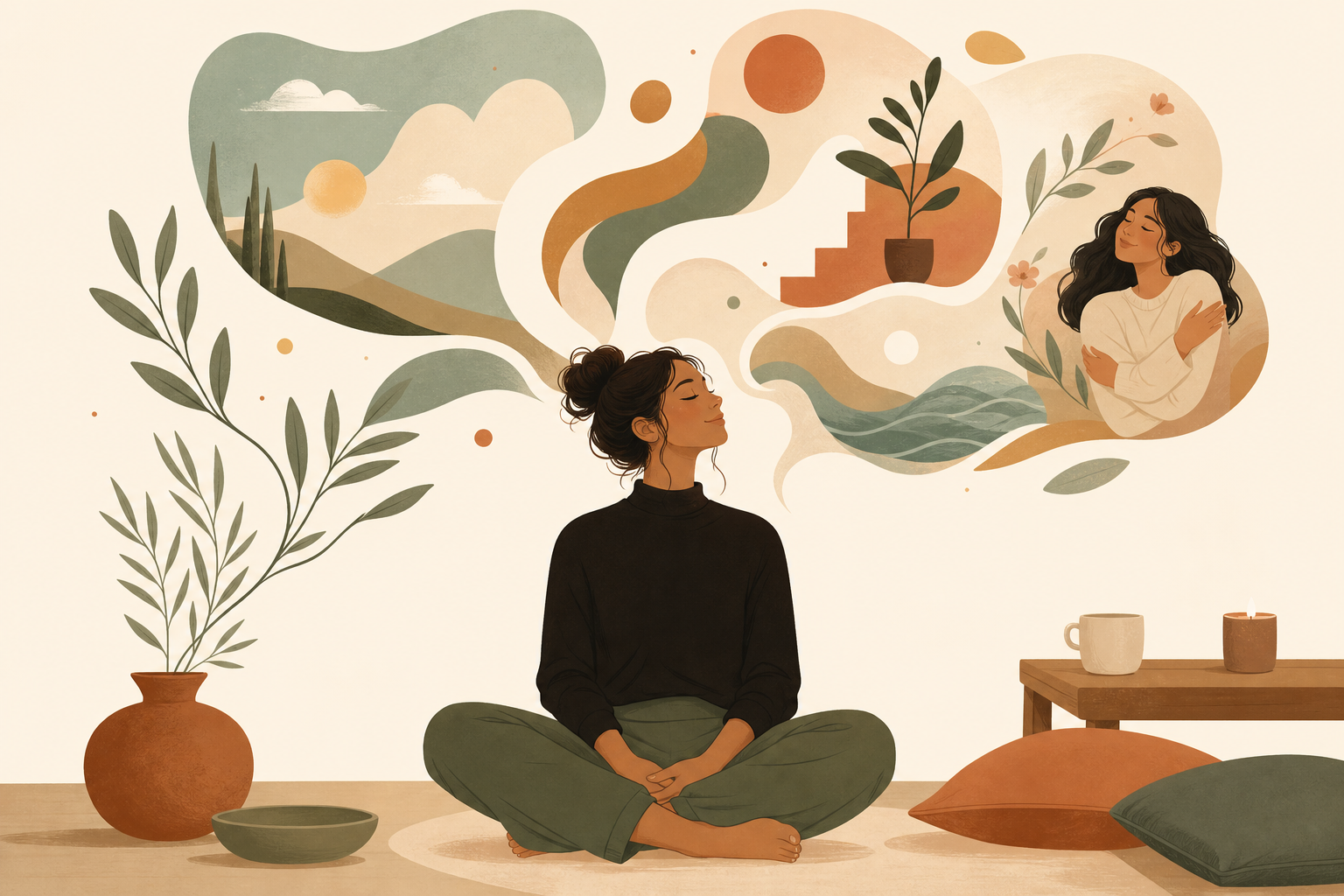
What comes up is not your breath. It is tomorrow’s meeting, something your partner said, your bank balance, and whether the person you messaged earlier has read it.
By the time the timer goes off, you are thinking, “What is the point of this?”
Have you ever had that happen? The moment you close your eyes, everything you had been trying not to look at lines up in your mind like people waiting at a checkout.
When meditation feels pointless, you may be treating distracting thoughts as failure—and then feeling disappointed by the gap between that sitting practice and how hard daily life still feels.
Let me be clear: your ability to focus is not broken. Trying to quiet your mind on a mentally noisy day is a little like looking for the vacuum cleaner in a cluttered room and making more of a mess in the process.
When the floor is full of things, telling yourself to clean it up faster only makes you more irritated.
Meditation is often described as a way to get rid of thoughts and calm down. I think that explanation creates the first stumbling block. Meditation is not a competition to empty your head.
If it becomes another place where you find yourself unable to be blank and then blame yourself for it, the whole thing has gone sideways—seriously.
Do distracting thoughts mean my meditation has failed?

When the goal becomes “do not think,” scoring starts every time a thought appears: “I am thinking again.” “I am not suited to this.” “I failed again today.” You meant to count breaths, but somehow you are running a self-review meeting.
Your eyes are closed, yet your mind has started a performance evaluation.
In concentration-based meditation, noticing that attention has wandered and returning it to the chosen object is itself the practice. Research has reported differences in brain-network activity related to attention and self-referential thought among experienced meditators.
That does not mean zero thoughts are the goal. It is more realistic to understand the point as noticing and returning, again and again.
It sounds modest, but the difference matters. When a thought appears, do you add another layer of story—“I messed up again”—or do you simply think, “Oh, I was thinking,” and return?
The second option does not erase the thought. It just does not hand the steering wheel over to it completely.
Imagine seeing a message from your manager on a Monday morning platform: “Can we talk for a moment?” Your stomach tightens. People who meditate still have reactions like that.
But if you can pause for one beat and notice, “I am watching a preview of anxiety right now,” you have more options before firing off a reply.
You may be able to hold off on deciding, “What did I do wrong?” Maybe it is only a scheduling question. The difference looks small, but it can change your afternoon and the conversation you have later.
You probably do not need to become perfectly calm. You may just want to become someone who does not send the extra message from pure reflex. Meditation can do real work there.
Why does trying to calm down make me more tense?
Are you thinking, “Here comes another vague mindset lecture”? Fair enough. If watching your breath solved everything, your life problems would disappear while you waited at the convenience-store register.
The brain tends to anticipate danger and mistakes. Because getting a prediction wrong can be costly, it repeatedly replays unpleasant memories and uncertain futures.
When you close your eyes and reduce outside input, those replays can become more noticeable. If anxiety seems to increase during meditation, it may not have appeared from nowhere; you may be noticing a volume that notifications and work usually cover up.
A faint ringing in your ears may go unnoticed on the train, then suddenly stand out in a quiet room before bed. Thoughts during meditation can be similar.
They may not have increased; other noise has simply dropped away. That does not mean you should ignore what comes up. It does mean you do not need to immediately conclude that something is wrong with you.
The more you order yourself to calm down, the harder it can be for your body to settle. It is the same structure as lying awake and becoming more alert because you are telling yourself, “I have to sleep.” Telling a child with a fever to cheer up does not lower their temperature.
Commands do not automatically switch off the body’s alarm.
Try not to make meditation a place for judgment. A day when you sit for five minutes and do not feel calmer is not necessarily a zero. If you can recognize, “My mind was working this hard today,” that is already something.
Sitting Still Does Not Change Everything Because Your Brain Is Not Lazy
Why does my mind keep making everything about me?

A brain network that tends to become active when we are not focused on a task is called the default mode network, or DMN. It is thought to be involved in reviewing the past, simulating the future, and constructing ideas about how other people see us.
It is useful. But when you are tired, the review meeting can easily go into overtime.
At 3 p.m., you are making instant coffee in the office kitchen while replaying something awkward you said last year. At home, brushing your teeth, you calculate an expense that may happen next month.
Your body is here, but your attention is commuting between the past and the future. You may know the feeling of eating miso soup at the table while your brain reruns the morning meeting.
This is not something to dismiss as having a negative personality. The DMN helps organize experience and anticipate what to do next. It is part of the brain’s normal operation.
But normal operation can be exhausting when it keeps working late into the night.
It grades a finished conversation dozens of times and makes you experience a failure that has not happened yet. The brain may think it is preparing you. For you, it can simply be draining.
Meditation is not an off switch for the DMN. It may be more helpful to see it as practice in shifting where attention rests and noticing when you have been pulled into a story.
“There I go making it all into my story again.” Even that moment can create a few centimeters of space between you and the narrative. Some days, a few centimeters is enough.
POINT
Feeling as though you have more thoughts during meditation does not, by itself, mean you are not suited to it. Automatic thoughts that usually go unnoticed may simply have come into view.
Why can my body stay on alert even when I understand the situation?
The moment you open an unpleasant email, your shoulders rise. On an evening when a child keeps crying, you may clench your back teeth. These reactions do not always happen after conscious thought.
The brain’s threat-detection systems, including the amygdala, and autonomic nervous-system responses can move quickly. You may tell yourself, “Do not worry about it,” while your heartbeat and muscle tension have already taken off.
A phone notification can make your stomach clench before you have even looked at the screen. You do not yet know who sent it. That does not mean you lack willpower.
Your body may be picking up a cue that resembles something it has learned from past experience.
The brain does not work only by thinking first and feeling afterward. That is why I think the popular advice to “just change your thinking” is only half true.
Ways of thinking can help. But when your body is sounding like a fire alarm, positive words alone may not get through.
You can stand in the kitchen at 10 p.m., in front of a bowl of cold miso soup, repeating, “I am okay.” Sometimes that does not persuade the tension in your body.
It is too rough to say that failing to change through meditation means you have not tried hard enough. On days when your system is highly alert, simply sitting may feel difficult.
Some people become more aware of breathlessness when they focus on breathing. That does not make you weak; it may mean your body is saying, “Wait a moment.”
If meditation repeatedly brings breathlessness, palpitations, intense fear, or painful memories from the past, please do not turn it into an endurance contest.
If you are concerned about your physical or mental state, consulting a qualified professional is one option. This is not about competing over who can keep sitting the longest.
Why does knowing better not stop my usual reactions?

In cognitive behavioral therapy, events, interpretations, emotions, and behaviors are understood to influence one another. No reply does not automatically mean someone dislikes you.
Even so, some people feel their stomach grow heavy the second they see a message screen without a read receipt. Understanding the idea does not make a long-practiced reaction immediately disappear.
You know, intellectually, that the other person may be busy. Yet you open the chat, close it for no reason, and open it again. You mean to check once before bed, but you are looking again 15 minutes later.
In moments like this, it is not that you do not know the logic. An interpretation has linked up with a bodily response and starts running almost automatically.
Cognitive behavioral therapy addresses this connection. An event produces an interpretation; the interpretation brings emotions and behavior; then the result of the behavior strengthens the interpretation.
For example: no reply → “Maybe they dislike me” → anxiety → repeated checking or sending an accusatory message → tension in the relationship → stronger certainty that they dislike me.
That is how a reflex can reinforce itself.
Some people who feel meditation is pointless are asking meditation to do all the work of correcting their thoughts. But expecting five minutes of sitting to carry sleep deprivation, an overloaded schedule, isolation, and anger you have swallowed for years is a lot.
It is like trying to handle an entire move with one kitchen knife. The tool is not bad; it is simply not the same job.
- Instead of counting how many distracting thoughts arose, notice how many times you realized and returned.
- Do not decide meditation has value or no value based only on how you feel immediately afterward.
- Look at sleep, food, and relationship stress on the same screen.
- On days of intense distress, do not carry it alone.
Seeing these four things together can make it easier to step away from the broad conclusion, “I am not cut out for meditation.” If anxiety is strong on Sunday night, it may be worth looking not only at your sitting technique but also at whether next week is already overpacked.
People do not become overwhelmed for only one reason.
Do Not Try to Become a Person Who Is “Good at Meditation”
Is three seconds after a reaction more useful than twenty minutes every day?
Many articles recommend 20 minutes every morning to people who struggle to make meditation a habit. I do not think that needs to be the goal from the start.
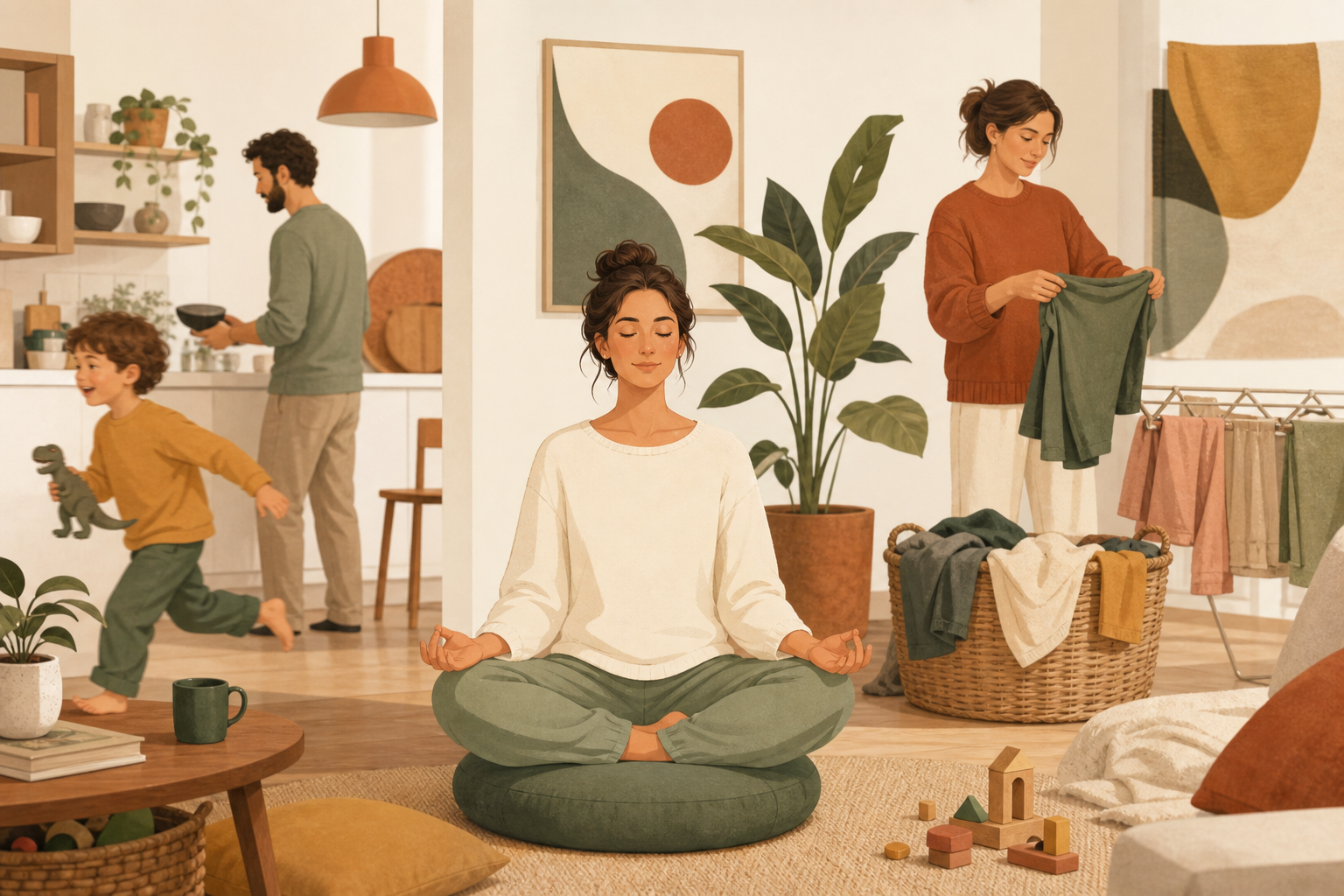
People who cannot keep it up are not necessarily weak-willed; their calendars may already be full. At 7:12 a.m., while holding toast in your mouth and looking for your child’s socks, it is hard to find 20 spare minutes.
The moment you think, “It is pointless unless I do it every day,” meditation becomes homework again. Work email, taking out the trash, breakfast, the clock telling you that you are about to be late—then you blame yourself for not making room for 20 minutes.
That is not really a meditation problem. Your life is already packed.
What may help more is creating a short pause right after a reaction. Before pressing send. In the few seconds before the elevator doors close. The moment you put extra snacks into your basket at the convenience store.
Do not strain to breathe deeply; simply put words to what is here: “My shoulders are tight.” “I want to get this over with.”
Even that can create a little distance from autopilot. Maybe you want to answer a family member with, “Why would you say that now?” The point is not to become someone who never says anything back.
It is to know, for three seconds, “I am angry right now.”
With those three seconds, another option besides a cutting reply may appear. The value of meditation may be better measured not by how long you sit, but by what you stop rushing into after you stand up.
Why can practicing alone at home only reach so far?
Meditating at home has real benefits. It costs no money, requires no travel, and can continue within everyday life. But your usual room contains your usual roles.
Open your eyes and there is the washing machine chime, a work chat, or a message you need to answer for your family. In familiar environments, the brain can easily replay familiar responses.
Maybe you can watch your breath for five minutes, then immediately open a notification, reply in your usual tone, and put yourself last in the usual way.
Have you ever done that? This is not an argument that meditation at home is useless. It is just harder than it seems to change deeply learned reactions in a place where the environment and your roles remain exactly the same.
I also think it is too simplistic to say, “Go into nature and you will change.” A walk in the woods can help on some days, but it does not make the questions you carry disappear.
You may take photos, eat something good, and find yourself back in the car with the same anxiety on the way home. Nature is a powerful setting, but not a cure-all for untangling life-long reaction patterns.
What may be needed is not escape from reality, but time in a setting designed with safety in mind: time to work with feelings and memories that your usual thinking tends to avoid, and to see how they connect to your reactions in daily life.
Understanding something in your head and choosing differently in the same situation are not the same thing. Mix them up, and you can end up with more knowledge while life stays the same—a slightly bitter place to be.
The wall of rushing results
If you grade every session by whether you felt calm today, meditation becomes another obligation.
The wall of unchanged daily life
Even if you spend more time sitting, the foundation of your reactions may remain unsteady when sleep deprivation and an overloaded schedule continue.
The wall of carrying it alone
When strong feelings or memories emerge, going too deeply without support can add to the burden.
Could a structured setting help me look at my patterns more deeply?
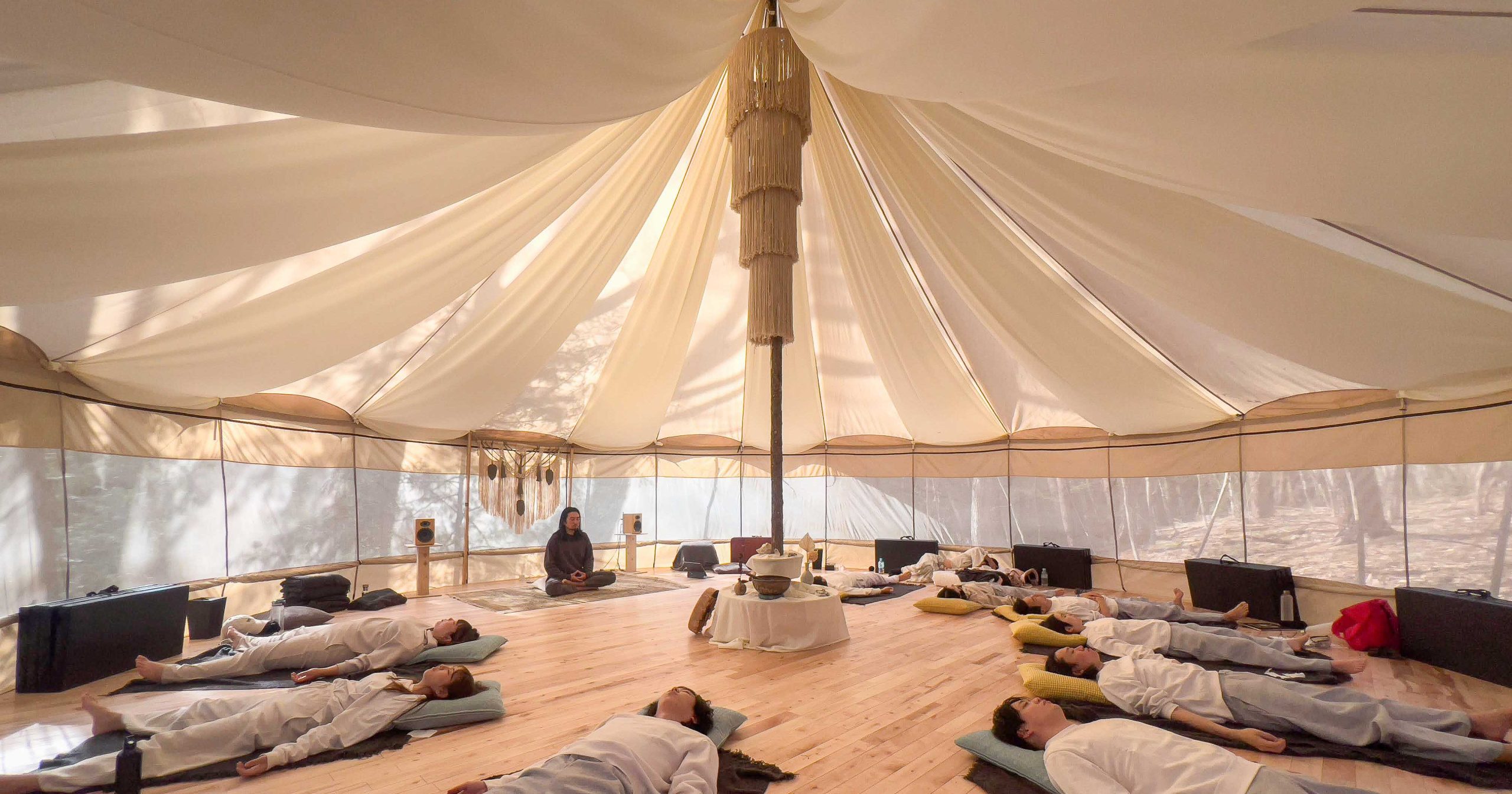
If you understand something intellectually but repeat the same reaction in the same situations, a setting that works step by step with body sensations, feelings, and ways of seeing may suit you better than concentration practice alone. nehan’s “Journey to See Your Life Flash Before Your Eyes” is a two-night, three-day retreat in the forests of Yatsugatake, using sound, breath, and body awareness to revisit your own reaction patterns.
This is not a plan to simply relax at an inn. Within a carefully prepared setting, participants make contact with feelings they would usually explain away, create distance from long-held beliefs such as “I have to be this way,” and move through steps that help bring the experience home.
What may change afterward is not that unpleasant events disappear, but that there is more room in how you respond to the same events. It is important not to confuse those things.
Your manager’s comment does not vanish. Misunderstandings with family and work deadlines do not disappear either. But there is a practical difference between lying awake replaying anger alone after coming home, and being able to ask, “What did that comment touch in me?”
I do not see a retreat as merely a place to rest in nature. I see it as a place to update your inner operating system. That may sound strong, but I mean it.
If you only need rest, a vacation may be enough. But if you want to understand why you keep getting stuck in the same place, you may need a design that takes you out of ordinary life and helps you look at yourself through body, feelings, and memory.
Ease the mind’s vigilance
Step out of constant thinking mode and become more able to notice what is happening in the body.
See repeated reactions
Take time, without rushing, to examine the feelings and beliefs beneath anger, anxiety, and endurance.
Create a bridge back to daily life
Connect what you notice during the journey to forms you can remember at work and with family.
What are you asking meditation to give you when you sit down? Calm? An answer? Or the urgent feeling that you do not want to repeat the same reaction anymore?
It is okay to have nights when meditation feels pointless. That discomfort may be a cue to reconsider whether the method fits, whether you are asking it to carry too much, or whether something heavier than you can handle alone has come to the surface.
Different questions call for different settings.
FAQ
Q: Does having distracting thoughts throughout meditation mean I am doing it wrong? No. Noticing that attention has wandered is a natural part of meditation.
Rather than grading the number of thoughts, it is often more useful to notice how you return after becoming aware of them. That makes practice less likely to become an obligation.
Q: If I continue meditating, will my personality change? Expecting meditation to remake you into a completely different person can become painful.
Meditation is one way to develop room to notice reflexive thoughts and feelings. The form and pace of any change vary from person to person.
Q: Can meditation beginners consider a retreat? Suitability is not determined by how long you have meditated. A retreat can be one option for people who want to examine reaction patterns that are difficult to work with through solo sitting practice, in a different environment.
If you have health concerns, include consultation with a qualified professional in your decision.
If meditation feels pointless, you do not have to force yourself to believe in it. That discomfort may be a sign that surface-level relief is no longer enough for you.
Whether you continue meditating or change the environment in which you look at yourself, nehan discusses the thinking behind that choice and its step-by-step approach in a free online course.
FREE PROGRAM
A doorway to seeing your life anew — through the body
Add us on LINE to receive the free online lessons — the parts we couldn’t fit into this article.
Free to join, unsubscribe anytime. This is not medical treatment; results vary by individual.
Sources/References
- Goyal, M. et al. “Meditation Programs for Psychological Stress and Well-being.” *JAMA Internal Medicine*, 2014.
- Tang, Y.-Y., Hölzel, B. K., & Posner, M. I. “The neuroscience of mindfulness meditation.” *Nature Reviews Neuroscience*, 2015.
- Fox, K. C. R. et al. “Functional neuroanatomy associated with mindfulness meditation.” *Neuroscience & Biobehavioral Reviews*, 2016.
- Brewer, J. A. et al. “Meditation experience is associated with differences in default mode network activity and connectivity.” *PNAS*, 2011.
This article provides general information and is not medical advice. Results and experiences vary. If you have concerns about your physical or mental health, please consult a qualified professional.