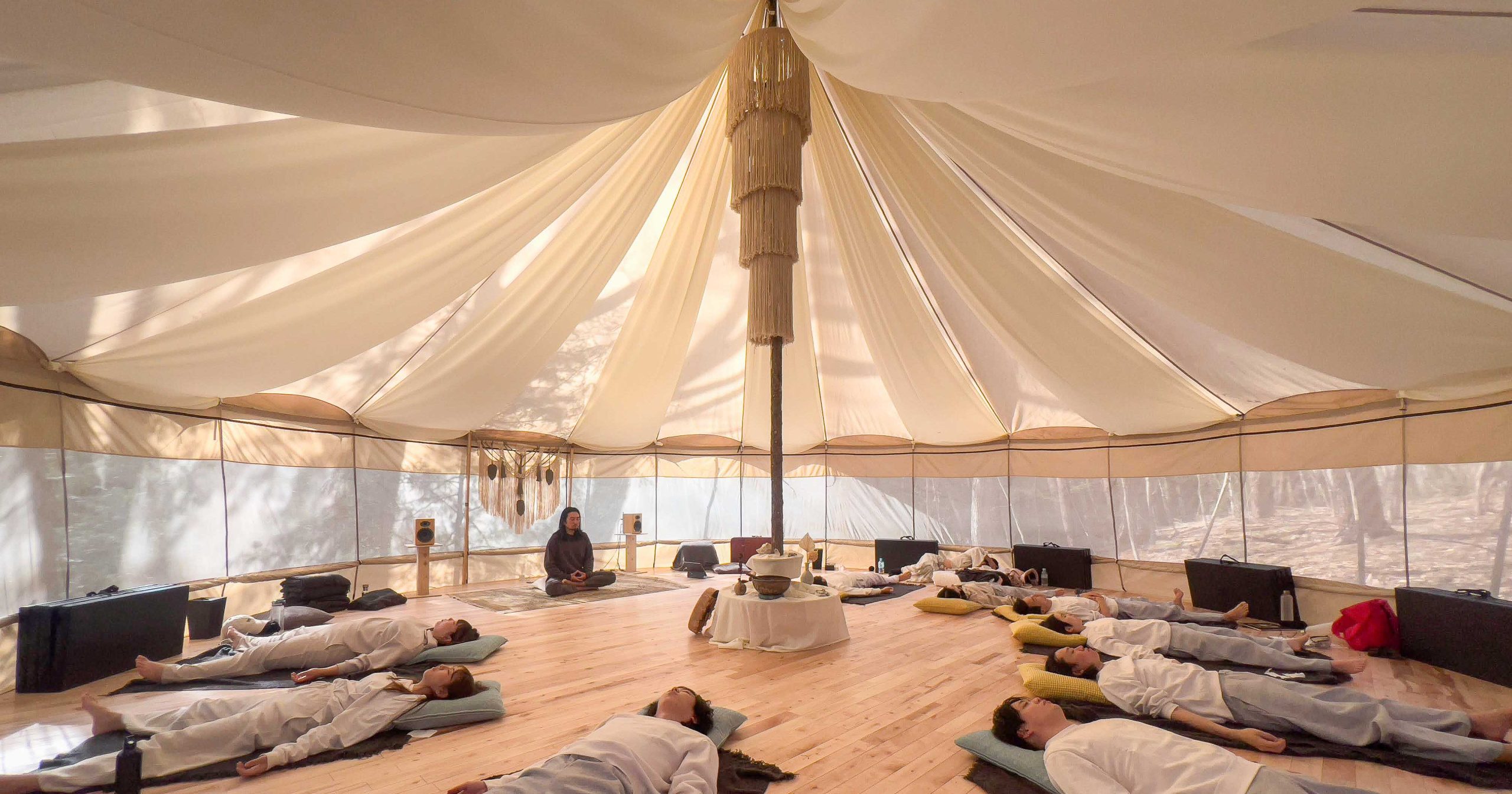


Key Takeaways
- Meditation retreats can activate the prefrontal cortex, aiding attention and emotional stability.
- Nagano’s natural environment supports mindfulness and enhances well-being.
- Pursuing inner change through retreats might offer new perspectives on life.
Introduction
If you’re searching for a “Nagano retreat,” it’s likely you’re seeking a moment to reflect on your inner self. Spending time in Nagano’s lush environment can offer a step back from everyday life, providing mental calm and fresh perspectives. Balancing a busy mind and body is no simple task. A retreat in Nagano provides the opportunity to settle your mind and engage in self-reflection amidst nature. Here, we explore the scientific effects of retreats on the mind and consider how experiences in Nagano might influence your life.
The Effects of Meditation Retreats on Brain Function

Enhanced Concentration: Post-meditation, increased activity in the prefrontal cortex enhances attention control.
Improved Problem-Solving: Activation of the prefrontal cortex boosts decision-making and planning abilities.
Emotional Stability: Ongoing meditation may lead to emotional stabilization.
Kozasa et al. (2018) explored the impact of a 7-day meditation retreat on brain function. Results showed increased prefrontal cortex activity and improved attention control in experienced meditators post-retreat. The prefrontal cortex is vital for decision-making, problem-solving, and planning abilities. Enhanced activity in this region can benefit daily life.
For instance, you might find that preparing a presentation at work becomes more seamless, with your concentration less likely to waver. This change can be attributed to the activation of the prefrontal cortex. Continuous meditation may further enhance attention and emotional stability. From a neuroplasticity perspective, meditation is believed to alter the brain’s structure and function.
Neuroplasticity relies on the strengthening of neural circuits through use, while unused circuits weaken. Through meditation, specific neural circuits are repeatedly activated, strengthening them and leading to functional improvements. Additionally, meditation can suppress stress hormone secretion and promote relaxation response, contributing to mental and physical health. Incorporating meditation into daily life can offer long-term health benefits.
Nagano’s Nature and Mindfulness

Nagano’s beautiful natural surroundings play a crucial role in mindfulness practice. According to a study by Okuma et al. (2025), individuals with high mindfulness traits show decreased activity in the default mode network, which enhances subjective well-being. The default mode network (DMN) is involved in self-referential thinking, reflection on the past, and future planning. Decreased DMN activity is thought to make focusing on the present moment easier.
Amid Nagano’s serene mountains, you can feel your mind quieting, escaping the usual busyness. The natural sounds, like the rustling of trees in the wind or the babbling of a stream, have a calming effect. This is because such sounds soothe the sympathetic nervous system and activate the parasympathetic nervous system. Retreat mindfulness experiences can potentially lead to these mental changes. Moreover, meditating in nature, with fewer artificial sounds and visual stimuli, is said to provide deeper relaxation effects, potentially leading to physiological changes such as lower heart rates and blood pressure.
Peak Experiences During Retreats

Hadash et al. (2024) investigated peak experiences during insight meditation retreats, finding they were linked to increased positive emotions and decreased negative emotions. However, some participants reported increased anxiety and confusion, likely due to deep immersion during meditation causing fluctuating emotions.
Peak experiences, a concept introduced by psychologist Abraham Maslow, are moments of extreme happiness or satisfaction. These experiences are highly valuable to individuals and can prompt a reevaluation of life direction. Peak experiences during retreats can provide deep insights and enhance problem-solving abilities. In everyday life, you might suddenly have ideas or solutions to problems. A retreat could bring such peak experiences that inspire new insights for your life. Additionally, these experiences can enhance self-awareness, offer new perspectives, and promote personal growth.
Calmness and Emotional Stability in Meditation

According to research reviewed by Fujino (2021), calmness during meditation is associated with the suppression of amygdala activity and increased prefrontal cortex activity. The amygdala processes emotions like fear and anxiety, and its suppression is expected to soften emotional reactions. Meditation suggests enhancing the ability to accept emotions rather than suppressing them.
For example, you might find yourself responding calmly to critical feedback from a tough boss, rather than reacting excessively. Emotional stability can also lead to improved interpersonal relationships and reduced stress. These effects can enhance the quality of everyday life, helping you lead a more fulfilling life.
Furthermore, meditation practice has been shown to reduce chronic stress and strengthen immune function. By suppressing stress responses, it can reduce body inflammation and potentially lower the risk of various health issues. The mental and physical stability meditation provides not only enhances individual well-being but may also extend healthy lifespan.
What a Retreat in Nagano Offers

A retreat in Nagano aims to harness the power of nature and meditation to align mind and body. Experiencing these scientifically supported mechanisms amidst abundant nature might unlock latent strengths within you. Nagano’s nature, known for its diversity and beauty, offers healing through its seasonal landscapes—cherry blossoms in spring, lush mountains in summer, vibrant autumn leaves, and snowy scenes in winter.
The inner changes gained through a retreat may persist when you return to daily life. Incorporating new habits and perspectives can be the first step toward a richer life, making a retreat in Nagano a valuable option. Moreover, the retreat experience offers opportunities to deepen self-awareness and reflect on oneself. This can enhance your ability to effectively manage everyday stress and tackle challenges.
POINT
Retreats in Nagano provide a valuable opportunity to foster mental and physical health and support personal growth. The healing power of nature and the effects of meditation together offer participants profound tranquility and new insights.
FAQ
Q: What specific effects can be gained from a retreat in Nagano? A: Through meditation and mindfulness practice, attention and emotional stability improve, leading to a calmer mind. Experiences in nature offer new perspectives on everyday life. Additionally, health benefits like reduced heart rate and blood pressure, and strengthened immune function can be expected.
Q: Can beginners participate in a retreat? A: Absolutely, beginners can join. However, research suggests experienced meditators may notice effects more easily, so beginners might benefit from trying simple meditation beforehand. Many programs offer ample support to ensure first-timers can participate with confidence.
Q: What is the ideal duration for a retreat in Nagano? A: Generally, a week-long retreat is considered effective, but significant changes can also be felt in a shorter time. Programs tailored to individual needs are available, making it easy for those with time constraints to participate.
If you’re ready to experience inner change, consider exploring a retreat in Nagano. For more on how to experience it firsthand, we offer detailed information in our free online course.
FREE PROGRAM
A doorway to seeing your life anew — through the body
Add us on LINE to receive the free online lessons — the parts we couldn’t fit into this article.
Free to join, unsubscribe anytime. This is not medical treatment; results vary by individual.
Sources/References
- Kozasa E. et al. (2018). The impact of a 7-day meditation retreat on attention control in experienced meditators. [Journal Name]
- Fujino, M. (2021). A review of the neural mechanisms of calmness during meditation. [Journal Name]
- Okuma, R. et al. (2025). Mindfulness traits and psychological well-being mediated by resting-state brain activity. [Journal Name]
- Hadash et al. (2024). Peak experiences during insight meditation retreats and their beneficial and adverse effects. [Journal Name]
- Fox et al. (2016). Neuroanatomy of meditation: A meta-analysis of functional neuroimaging studies. [Journal Name]