

# For Your 30s, When You Don’t Know How to Live: 3 Things to Check When You Can’t Choose
Feeling unsure how to live in your 30s does not mean you are behind. It may be a sign that the approval and common sense you have relied on until now are no longer enough to make your next choice clear.
You do not need to rush toward the right answer for your whole life. You can begin by checking what has worn you down and what kind of time gives you some energy back.
What is happening when you do not know how to live in your 30s?
Am I unable to choose, or are my own wishes mixed with other people’s expectations?
Sometimes you are not unable to choose. Your own hopes and the expectations around you may be overlapping, making it hard to see what you are using as your standard.
Your 30s can bring more than a job change into view: marriage, children, where to live, caring for parents, savings, and housing costs. There are reasons behind both staying single and building a family.
The more you want to avoid making the wrong choice, the more one decision can feel like a grade for your entire life.
Does feeling that my job is wrong mean that I have chosen my whole life wrong?
“Your current job does not fit” and “you got your life wrong” are different things. During a difficult stretch, people can be more likely to judge situations in all-or-nothing terms.
Have you ever read an unread message on the train home and thought, “I can’t do any of this anymore”? That reaction may be telling you something important, but it does not have to become a verdict on your character.
Rather than treating uncertainty as a personal flaw, try separating out what is currently mixed together.
What are three things to check when you cannot choose?
What should I write down when I do not know what I want?

Everyday reactions often show you more than a large goal does. Write down moments that felt heavy and moments that felt slightly easier. Add details such as the tightness you feel when you look at your calendar, or how tired you are after a conversation.
Before deciding, “I want work that involves people,” write something more concrete: “I do not tire as easily after one-to-one conversations,” or “large meetings drain me.” Looking at your response in each setting, rather than at job titles, brings a choice closer to real life.
Why should I postpone important decisions when I am tired?
Put major decisions on hold on days when sleep or meals are disrupted. Resting is not weakness or a way of avoiding a decision; it can give you a more reliable place from which to make one.
You probably know this feeling: after several late nights, even choosing what to buy at the convenience store on the way home can feel like too much.
Do not ask that version of yourself to decide a move, a resignation, or the direction of your life.
How can I try a different direction without making a huge commitment?
Try work or learning that interests you through a one-off experience or by talking with someone who does it. You do not need to decide on a career change or relocation immediately.
The three steps are simple: write down your reactions, rest before deciding, and try something small. For a more basic way to sort through what you are feeling, see [how to face yourself](/journal/how-to-face-yourself/).
FREE PROGRAM
A doorway to seeing your life anew — through the body
Add us on LINE to receive the free online lessons — the parts we couldn’t fit into this article.
Free to join, unsubscribe anytime. This is not medical treatment; results vary by individual.
What approaches are available besides thinking through it alone?
When is keeping my own record a good way to work with uncertainty?

Keeping a record can suit you when you want to sort through uncertainty quietly. Set a short, manageable amount of time for it so that reflection does not become another task you feel you are failing to complete.
A few lines after dinner can be enough: what felt hard, what felt easier, and what you want to notice tomorrow. The purpose is not to produce a polished answer. It is to gather your actual responses over time.
When might it help to speak with a professional or join a supportive setting?
Speaking with a professional may be worth considering when poor mental or physical health, or past experiences, are strongly affecting your day-to-day life.
Check their qualifications, what they can discuss with you, and the cost.
Joining a setting away from everyday life may suit you when you want time for conversation and reflection. Before joining, check how it is run, what safety measures are in place, and whether you can take a break when you need to.
When should I seek medical or public support before trying self-reflection?
Ongoing inability to sleep or eat needs attention. If a low mood continues for a long time, connect with a medical provider or consultation service before focusing on self-reflection.
For support available to people who work, you can also check the Ministry of Health, Labour and Welfare’s Kokoro no Mimi.
A fuller comparison of ways to work with yourself is available in [how to compare approaches to facing yourself](/journal/ways-to-face-yourself/).
Is there an option to borrow a space when I keep returning to the same thoughts alone?

What can I do when writing things down does not change the thoughts I return to?
You may keep records and still return to the same thoughts. Or there may be no room in ordinary life to notice your own reactions. In those moments, borrowing the support of someone who can accompany you, or a place where you can reflect calmly, can be one option.
A change of setting is not automatically the answer. It can simply create a little more room than you have between work, laundry, messages you have not answered, and the next thing that needs doing.
How can I check whether a retreat or reflective space is safe and suitable for me?
No setting will suit everyone. Do not choose based on how appealing the program sounds alone. Check the organizer’s background and what they can be consulted about; whether you can rest, decline, or leave partway through; and the fees, cancellation policy, and any additional costs.
Also ask whether there is an opportunity for consultation or reflection after the program, and whether the content can be adjusted to your condition.
These points can help you assess, more safely, whether a place is right for you.
Should I prioritize medical support when my condition feels unstable?
Prioritize medical support when you are experiencing severe distress or have concerns about your physical condition. A reflective setting is not a replacement for medical care.
You do not need to prove that you can manage alone before asking for help. Choosing the kind of support that matches your current condition is part of taking yourself seriously.
Is it okay to join a two-night, three-day retreat right away?

How do I know whether staying away from home for several days is right for me?
You can consider it if your condition and circumstances allow it, and you understand and feel comfortable with the content and safety arrangements. For some people, though, spending a block of time away from home is itself demanding.
Start by separating the question: Do you need rest? Do you want to speak with someone? Or do you want to think in a different environment? Those needs can overlap, but they are not identical.
What is nehan’s “Journey to See Your Life Flash Before Your Eyes”?
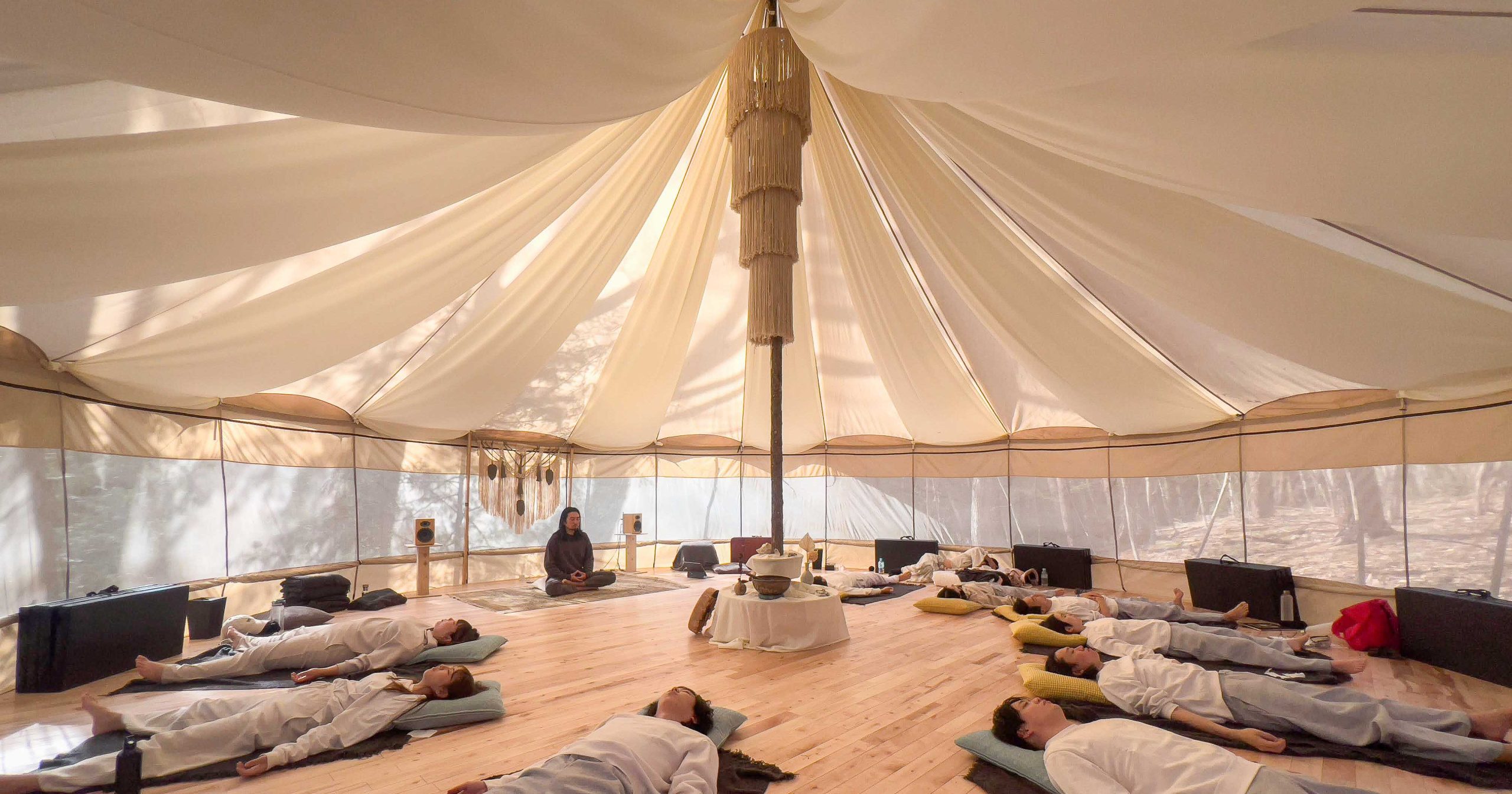
nehan’s “Journey to See Your Life Flash Before Your Eyes” is a two-night, three-day retreat held in Kobuchizawa, Yatsugatake. It offers time away from daily life for conversation and reflection.
The program also includes 14 days of follow-up after you return home, creating time to sort through what you notice once you are back in your usual routine.
It is not necessary to decide quickly on the assumption that you will attend.
What should I confirm before deciding whether to participate?
Check in advance whether an overnight setting suits your current state. Confirm the schedule, costs, cancellation terms, and whether you can step back or ask questions during the program.
This program is not a medical practice and is not intended as treatment or care. Individual experiences and outcomes vary; if you have strong symptoms or health concerns, seek appropriate medical support first.
FAQ
Q. Is it too late to have no idea what I want to do in my 30s? A. Not necessarily. More responsibilities and experience can make the roles that do not fit, and the conditions you want to protect, more visible.
Start by gathering your day-to-day reactions.
Q. Should I quit my current job? A. An article cannot answer that for you. Separate whether the discomfort comes from the work itself, lack of rest, or exhaustion related to workplace relationships.
Gathering information while supporting your daily life and physical condition before resigning is also an option.
Q. I am worried about taking time off and the cost. Where can I check? A. For any setting you are considering, confirm the dates, fees, cancellation policy, and additional costs in advance.
Consider whether the timing works without strain, including paid leave and busy periods at work. Ask the organizer about anything unclear before deciding.
A way of living is not something you complete through one decision. Read your own responses with care, then choose one small thing you can try next. If you need a structure for that process, you can review the details below.
FREE PROGRAM
A doorway to seeing your life anew — through the body
Add us on LINE to receive the free online lessons — the parts we couldn’t fit into this article.
Free to join, unsubscribe anytime. This is not medical treatment; results vary by individual.
Sources/References
- American Psychological Association, guidance on Cognitive Behavioral Therapy
- Beck Institute, guidance on Cognitive Distortions
- Ministry of Health, Labour and Welfare, “Kokoro no Mimi”