


At the funeral, everyone around you is crying. You alone have dry eyes. On the train home you think, “Have I turned into a cold person?”
You haven’t. When tension goes on for a long time, tears become hard to shed. What you need first is not the effort to cry, but time for your body to loosen.
I’m sad, but I can’t cry. Is it because my heart has gone cold?
Why don’t tears come even when I’m sad?
No, it isn’t coldness. Tears aren’t decided by how much you feel. They come more easily when the body feels safe.
- Staying on guardThe body enters protection mode, and tension continues
- The exit closesThe sadness doesn’t disappear; only the tears stop
- The body loosensYou feel safe and shift into a parasympathetic state
- Tears comeOnce you feel safe, they flow more easily
So while you’re braced, not crying is the normal response. The sadness hasn’t gone anywhere. The exit is simply closed.
What kinds of tears are there, and which kind needs safety first?
There are three kinds of tears. Basal tears keep the eye moist all day. Reflex tears come from dust or a cut onion. And emotional tears come with grief or relief.
Of these, the tears that flow with emotion have been linked to the parasympathetic system, the part of the body that works when it senses “it’s okay now” (Bylsma et al., 2019).
In other words, emotional tears are tied to the body standing down, not to how deeply you care.
Why do the tears only arrive at night, under the covers?
You probably know this scene. Nothing comes all day, and then the moment you pull the blanket over your head, it all arrives at once. That is the real order: safety first, tears after.
If your body slips easily into protection mode, I’ve written more about that in the article on HSP. People who can’t cry are often the ones holding steady the hardest. That’s all it is.
Is not being able to cry a sign of depression or another illness?
When does “I can’t cry” point to something more?

If not crying is the only thing, you don’t need to label it an illness. But if a hollow, empty feeling goes on for weeks, that’s a different story. Trouble sleeping, no appetite, a body that feels heavy.
If these stack up together, please talk to a psychiatrist or a mental health clinic.
Can stress or medication flatten my emotions?
A state where emotions move very little, sometimes called emotional blunting, is one response seen under heavy stress or depression. If you’re taking medication, tell your prescribing doctor exactly what you’ve noticed.
Among people taking antidepressants, a certain proportion have reported that their emotional ups and downs feel flattened (Goodwin et al., 2017). It’s worth mentioning rather than assuming it’s just you.
Are people who can’t cry less happy than people who can?
In surveys, a certain number of people do answer “I’ve stopped being able to cry.” Compared with people who could cry, no large difference in happiness was found.
There was, however, a reported difference in how connected to others people felt (Hesdorffer et al., 2018).
Not crying does not equal being broken. It may say something about how safe you feel around other people, which is a different question entirely.
Is there anything I can do myself to be able to cry again?
What are the 3 clues, and why isn’t crying the goal?
There are three. None of them has “crying” as the goal. That part matters.
Write down the small sensations in your body
Don’t go looking for “sad.” Just note “shoulders heavy,” “chest tight,” “throat stiff,” as they are.
Make time for the body to loosen first
Lie down, or sit in a warm bath slowly. If you’re checking work email at the same time, the body stays in work mode.
Leave the self that can’t cry exactly where it is
Don’t try hard to cry. Tears are a result, not a target.
Why might “just watch a sad movie” backfire?

People often say, “Watch a film that makes you cry.” I think that’s half counterproductive. When the tears don’t come, you think, “See, something really is wrong with me,” and the tension goes up one more notch.
If you want more on picking up what the body is saying, I’ve written about it in how to listen to your body when you have no motivation.
FREE PROGRAM
A doorway to seeing your life anew — through the body
Add us on LINE to receive the free online lessons — the parts we couldn’t fit into this article.
Free to join, unsubscribe anytime. This is not medical treatment; results vary by individual.
Facing it alone, seeing a professional, or joining a program: how are they different?
How do I choose between the three?
If you have symptoms, a professional comes first. If not, choose by how far you step away from daily life. The differences come down to two things: how far you leave your routine, and who is sitting next to you.
Facing it alone suits you if you want to start today, for free. The catch is that you stay in the same environment, so it’s easy to slide back. Seeing a professional is the first choice when you have symptoms like insomnia or loss of appetite; check insurance coverage and the cost of continuing.
Joining a program suits you if you want to step away for a few days and come back through the body’s sensations. It takes time and money, and anyone with symptoms should see a doctor first.
Is one of these better than the others?
None of them is “higher” than another. When someone asks “Are you okay?” and you answer “I’m fine,” and you honestly don’t know whether that’s true. At a moment like that, I don’t think you have to carry it by yourself.
I understand it in my head, but back in daily life I go numb again. What then?
Why does my body go back to the same tension on its own?
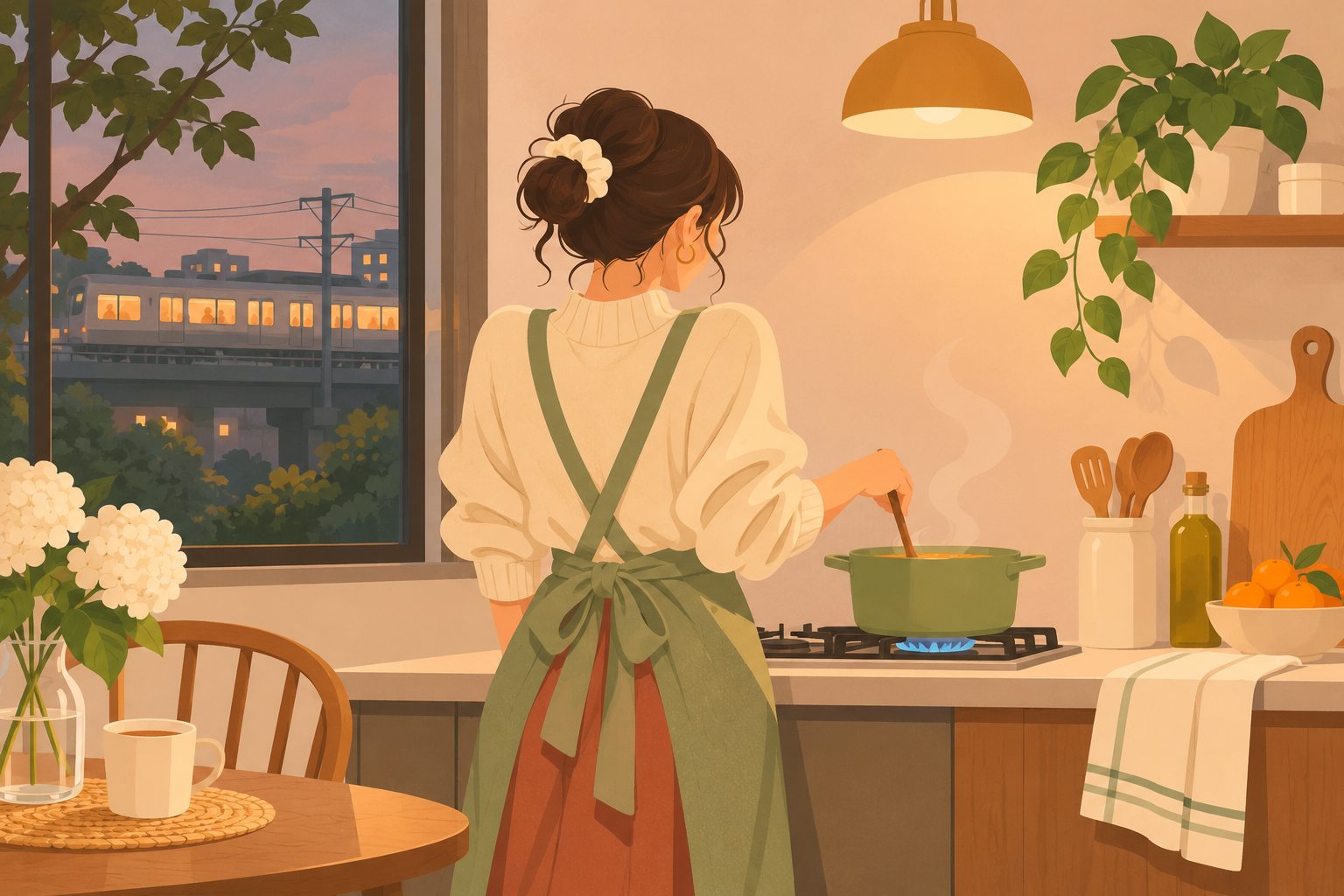
On your own, you drift back. That isn’t weak will. The same kitchen, the same boss, the same commuter train: the body responds with the same tension it always has.
You can tell yourself “I don’t need to be on guard,” and still, standing in front of the stove, your shoulders rise. Your boss’s voice, and your throat stiffens.
What the head knows and what the body relearns move at different speeds.
Who is a few days away from daily life suited for, and who isn’t?
Because of that gap, one option is to leave daily life for just a few days. nehan runs a self-transformation retreat where, together with a guide, you face yourself starting from the state of your body rather than from thought.
It suits people for whom “I feel nothing” has gone on a long time. It doesn’t suit people who need medical care first. For the difference between reflection and overthinking, see the article on introspection.
When choosing a place like that, what should I check?
What are the five things to confirm before joining?
There are five. In any setting where emotions move strongly, please put “the freedom to stop” above everything else.
- Is the organizer’s background clearly stated?
- Can you decline partway through, or take a break?
- Are fees and the cancellation policy written down?
- Is there follow-up after it ends?
- How intense is the breathwork guidance, and who is there to accompany you?
Should I be wary of places that promise “you won’t be able to stop crying”?

The more a pitch leans on “tears that won’t stop,” the more distance I’d keep. The body of someone who can’t cry is protecting itself right now. A place that forces it open is not one you need to choose.
Is jumping straight into two nights and three days okay?
Why might a few days be gentler than a single short session?
Some people who can’t cry find that the body’s tension won’t release in a short window. For them, having a few days can actually involve less strain, not more.
nehan’s “Soumatou Journey” is two nights and three days in Kobuchizawa, Yamanashi. In the 14 days after returning, the aim is to bring one change back into daily life.
What’s the one thing I can do tonight?
Whether it suits you depends on the person. For now, tonight, try writing a single line: “chest tight,” or “shoulders heavy.” If the retreat stays on your mind, read about the Soumatou Journey and the participant stories, then check the fit at a consultation session. There’s no need to rush.
FAQ
Q: Why can’t I cry? A: Tears come more easily when the body feels safe, so prolonged tension makes them hard to shed. It isn’t that the emotion is missing; the exit is closed.
Q: Is it strange that I can’t cry at a film, or even at a death? A: No. How people feel varies from person to person. Blaming yourself adds tension, so start by acknowledging the small sensations in your body.
Q: Is it okay to start with a 2-night, 3-day retreat? A: Some people find tension won’t release in a short time, so a few days can involve less strain.
Anyone with symptoms should see a doctor first. You can check the fit at a consultation session.
This article is general information, not medical advice. Results vary from person to person. If you have concerns about your health, please consult a professional.
FREE PROGRAM
A doorway to seeing your life anew — through the body
Add us on LINE to receive the free online lessons — the parts we couldn’t fit into this article.
Free to join, unsubscribe anytime. This is not medical treatment; results vary by individual.
Sources / References
- Hesdorffer DC, Vingerhoets AJJM, Trimble MR (2018). Social and psychological consequences of not crying: possible associations with psychopathology and therapeutic relevance. *CNS Spectrums*, 23(6), 414-422. https://doi.org/10.1017/S109285291700044X
- Bylsma LM, Gračanin A, Vingerhoets AJJM (2019). The neurobiology of human crying. *Clinical Autonomic Research*, 29(1), 63-73. https://doi.org/10.1007/s10286-018-0526-y
- Goodwin GM, Price J, De Bodinat C, Laredo J (2017). Emotional blunting with antidepressant treatments: A survey among depressed patients. *Journal of Affective Disorders*, 221, 31-35. https://doi.org/10.1016/j.jad.2017.05.048
- Japanese Ophthalmological Society, “Eye Diseases: Dry Eye” (on the function and secretion of tears) https://www.nichigan.or.jp/public/disease/
Related Articles
- Does the “life flashing before your eyes” experience really happen? Why it occurs outside of near-death, and how to receive it afterward
- What is the “Soumatou Journey”? A 2-night, 3-day self-transformation retreat in Yatsugatake that rewrites the subconscious
- Work is going well, yet you feel unfulfilled: before quitting, sort out what the unease really is, starting from the body




